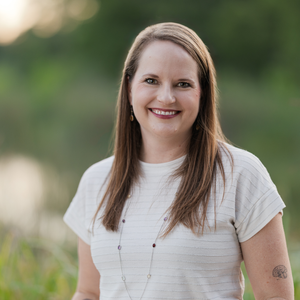
When I asked Lisa Duez what she would tell the version of herself who opened her group practice ten years ago, she talked about the weight of it: payroll, clinical responsibility, and knowing that the people who work for her go home and talk about her over dinner. Lisa is a group practice owner, a conference organizer, and the author of Leading Without Losing Yourself: The EASE Approach to Transforming Your Workplace. She joined me for Face Value, the card game we play on The Vicarious Trauma and Resilience Podcast.
What came out of our conversation was a picture of group practice leadership as something learned slowly, imperfectly, and mostly without training. Five moments from it stayed with me as a trauma psychologist.
Watch The Full Conversation
Prefer to watch our conversation? Head on over to YouTube or search for The Vicarious Trauma & Resilience Podcast on Apple Podcasts or Spotify.
What would you tell yourself in your first year of owning a practice?
What happens when the leader is the one who made the mistake?
Psychological safety grows when the leader names her own mistakes first, out loud, with a plan to fix them.
For Lisa, the core of psychological safety is that if you make a mistake, "we talk about it." She wants her clinicians to feel safe coming to her with "hey, listen, this happened, I don't know what to do," and just as safe saying, "I really don't like the way we do this."
Her practice runs a complex payroll system, and sometimes it doesn't get processed the right way. Her response is to "admit it," explain what's happening and how she'll fix it, and thank her team for their patience. When you're truly willing to tell your team this was not right, she said, "they have your back."
Her early response to her own mistakes was "internal, beat yourself up," and it has softened into "this is growing pains."
I shared with Lisa that when psychological safety on a team goes poorly, "it goes really, really bad," often because the leader isn't modeling it, and that the least healthy teams I've been on had leaders hiding things. When a leader hides a mistake, I usually see someone protecting herself under pressure, and I understand the pull. Lisa's payroll example shows the other option: a few uncomfortable minutes of plain speech in exchange for a team that knows where it stands.
Why is it so hard to listen when someone challenges how you lead?
Lisa sees defensiveness as a natural first response to challenge, and she has learned to sit with it before she acts.
Asked who had shifted something for her, Lisa named her coach, who kept asking whether there was another way. Her first reaction was "oh, man, no, I don't want to talk about that," and she admitted "you might get a little defensive." Then she has to "sit with myself a minute."
Clients push back on new ideas, and "I think we're no different," she said, so she asks herself, "What is my stage of change here?" She also named a pull every leader knows: "safety… is a little bit of a protection, and it should be." What it takes, she said, is "a lot of patience with yourself." Her mornings start with her planner. "I'm a fast person, I do a lot of things, but I've learned to sit first."
In the moment, I called her pushback a sign of ego strength and asked how we hold that discomfort while staying open to something new. What I took from her answer is that defensiveness can show up, get noticed, and then step aside while you decide how to respond.
How does a leader's nervous system shape a practice?
Lisa describes her calmer practice as a reflection of a steadier leader, one who knows she has time to make decisions.
Planning for 2027, Lisa said the week was "reminding me that you have time to make decisions." She told me she was "not exactly steady for a little bit," and that her framework helped her "become a little bit more steady." The result: "the practice is calmer," and "it's a reflection of me… because it's not this urgency."
That framework is EASE: emotions and authenticity as a leader's inner world, solving problems and empowering as the outer world. She wrote the book because in mental health, "there's no leadership training."
Lisa's EASE approach and my work on vicarious resilience come from different places, and this is where I hear them meet. In the episode, I described how vicarious trauma can push leaders into survival mode, where they start micromanaging and become the bottleneck because their nervous system is on overload. Learning to work with vicarious resilience, I said, lets us come back to so much of what Lisa describes: feeling our emotions, being authentic, solving problems, and empowering the people who work with us.
Asked what the week required of her team, she said, "just to be a good clinician," because "we'll take care of everything else." She wants clinicians to "come in and relax, do their job, do good therapy," and put it simply: "I take care of them, they take care of the clients." A steady leader carries the rest so her clinicians can stay with the clinical work.
Who supports the person at the top?
Lisa names the isolation of ownership directly, and she counters it with connection to people who walk the same path.
"You're a business owner," she said, "and you automatically become, you know, an island of one." Her answer: "we need each other." A couple of therapists at her practice share her interest in spiritual practice, and a close therapist friend sends her texts and videos.
Lately Lisa has been leaning more into spirituality, and because "you get so busy," the practice can slip. Mindfulness helps her come back: "I'm driving, I'm just driving." When she can't simply drive, she notices "the noise in your head" and takes it as her cue. The people around her help keep her coming back.
That idea sits at the center of BRAVE. Trauma therapists, and the leaders who hold them, aren't meant to do this work in isolation.
Leadership as a daily practice
Lisa said she could read "a billion leadership books" and still not have it figured out, because leadership "is a daily practice." Practice owners and clinical leaders create the conditions their clinicians work in every day, and they need support for that work every day, too. Lisa put her mission this way: "if we grow good leaders, we grow good communities." I'd add that good leaders grow when someone is looking after them as well.
If you lead a team and this conversation has you thinking about the conditions your clinicians work in, The BRAVE Method is the training I bring to trauma-exposed teams and group practices. It gives your team shared language for vicarious trauma, a practice for vicarious resilience, and a way to keep the conversation going after the training day.
About Lisa Duez
Lisa Duez founded her group practice ten years ago, organizes conferences, and writes and teaches about leadership in mental health. She is the author of Leading Without Losing Yourself: The EASE Approach to Transforming Your Workplace, built around her EASE approach: Emotions, Authenticity, Solving problems, and Empowering.