Stop Building Better Systems And Start Protecting Better Rhythms
Put down the planner. You don't need a better system. You need to stop letting the good ones you already have run on luck.
Here's what nobody tells trauma therapists who feel scattered and tapped out: you are not disorganized. You are carrying a load no calendar was built to hold, the steady weight of sitting with human pain all day, and then being told the fix is to optimize harder.

The work was never about building more structure. It's about protecting the rhythms that are already keeping you upright.
What invisible rhythms are you already running?
You already run dozens of unnamed rhythms: how you brace before a hard session, how you recover after, how you close a week. Protecting those comes before building anything new.

Notice it for a second. There's a way you steady yourself before a 9:00 trauma intake. A way you come down afterward, maybe a walk, maybe ten minutes of nothing. An order you open your inbox in. The pause you leave before a heavy call. Your nervous system built every one of these without asking your permission, because it was trying to keep you in the work you love.
The problem isn't that you lack systems. It's that these rhythms run on hope. Unprotected, unnamed, they're the first thing to collapse the week your caseload spikes. So we start by naming them, not optimizing them.
What is a nervous system-safe system?
A nervous system-safe system is structure that protects a rhythm. It lowers decision fatigue and guards your capacity instead of demanding more output from you.
That's the whole reframe. A system, in the optimization sense, exists to produce more. A nervous system-safe system exists to hold something already working so it survives a busy season. Its job is nervous system regulation, not productivity. When the structure protects the rhythm instead of pushing you, it stops feeling like pressure and starts feeling like scaffolding that holds you up.
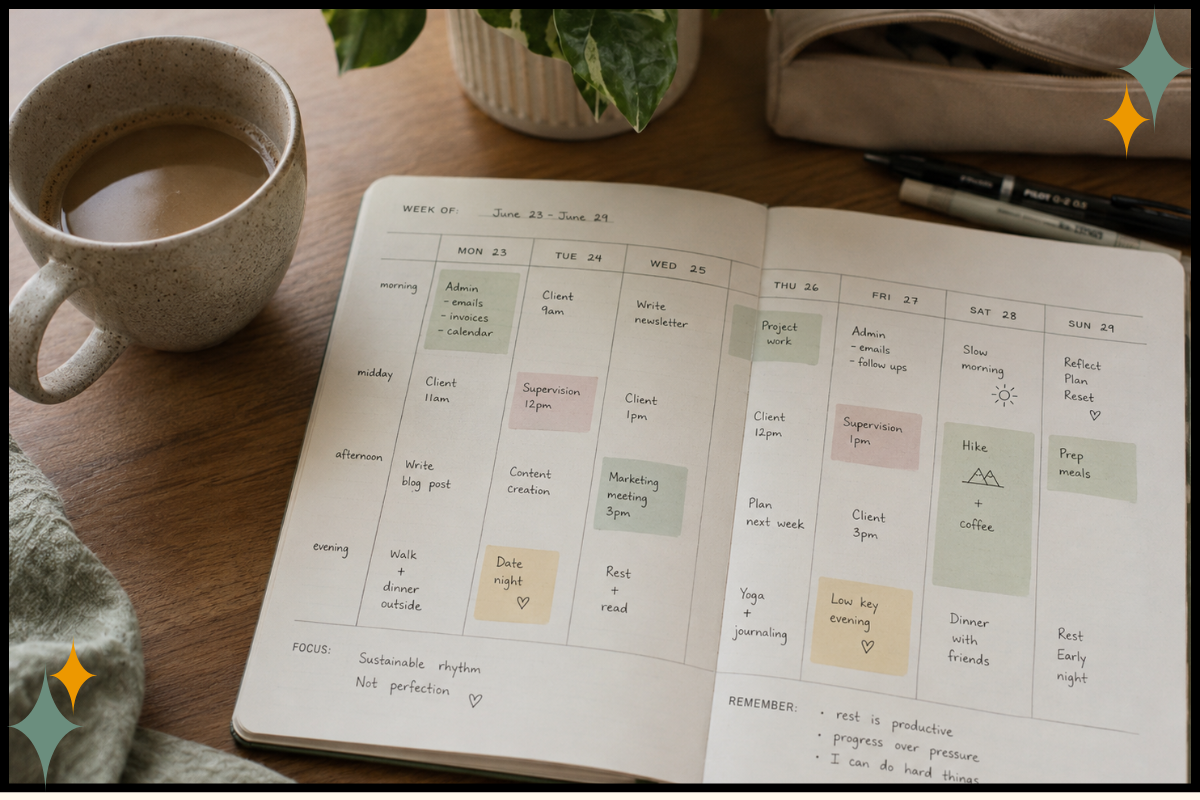
How do the three systems protect your rhythms?
1. Energy Systems
These systems protect your capacity, not just your time.
Maybe you block your calendar by energy type:
💚 Green = low demand
💛 Yellow = creative work
❤️ Red = high-emotion client sessions
You can also track your energy for a week (or across your cycle) and use that data to inform how and when you work. This is less about “being productive” and more about honoring how your body actually moves through your work.
2. Workflow Systems
Workflow systems help reduce internal chaos.
A simple end-of-week checklist (close out notes, prep Monday, review payments) can act like a deep exhale for your brain. In agency or group settings, that might look like a team wrap-up or a shared reset ritual.
Don’t overthink it. Ask: what helps me feel done?
3. Boundary Systems
These systems do the invisible labor of protecting your time, your values, and your energy.
Examples:
A standing autoresponder that shares your schedule and policy info
A pre-written “no” for consults you’re not taking
Blocking your first day back from vacation as admin-only
Building in a debrief moment after tough sessions
You don’t need a fancy tool to start. You just need a way to tell your nervous system: I’ve got you.
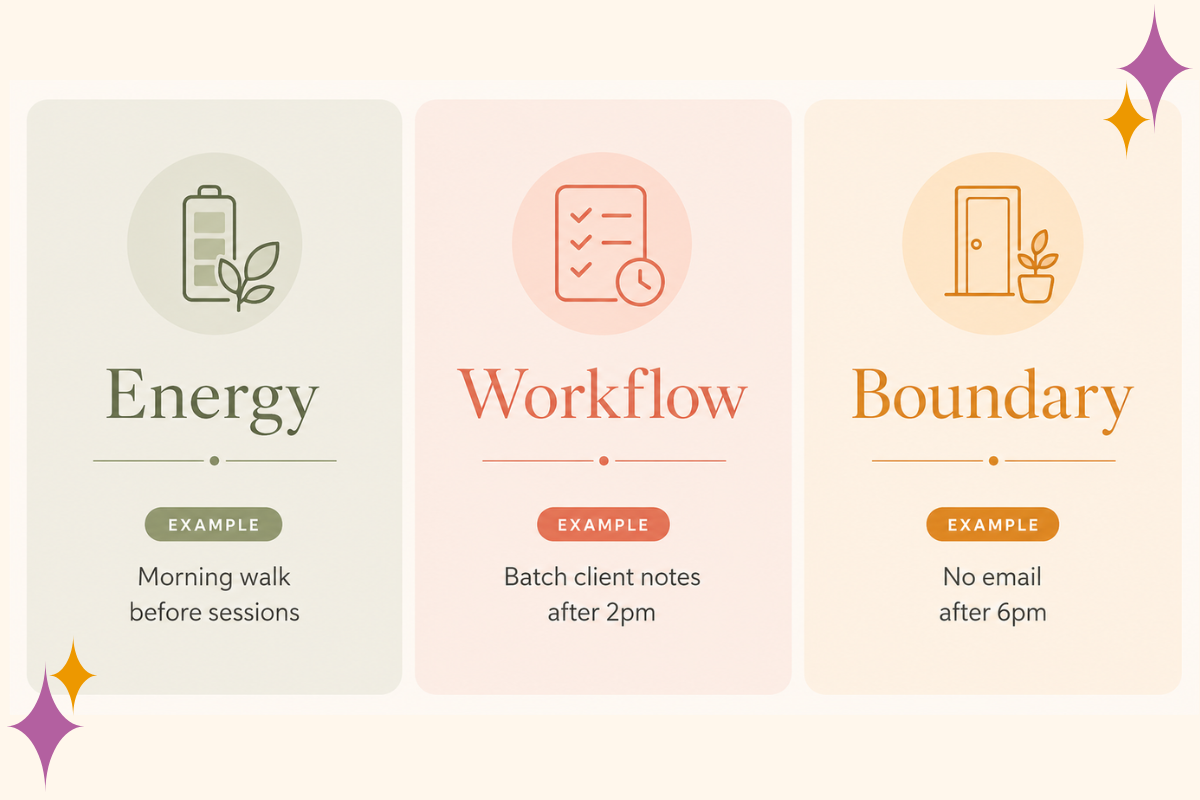
Which rhythms can you protect this week?
Start with three: guard the first 90 minutes of your week, hold one non-client day, and pair a grounding phrase with a routine task. Small, repeatable, no tech required.
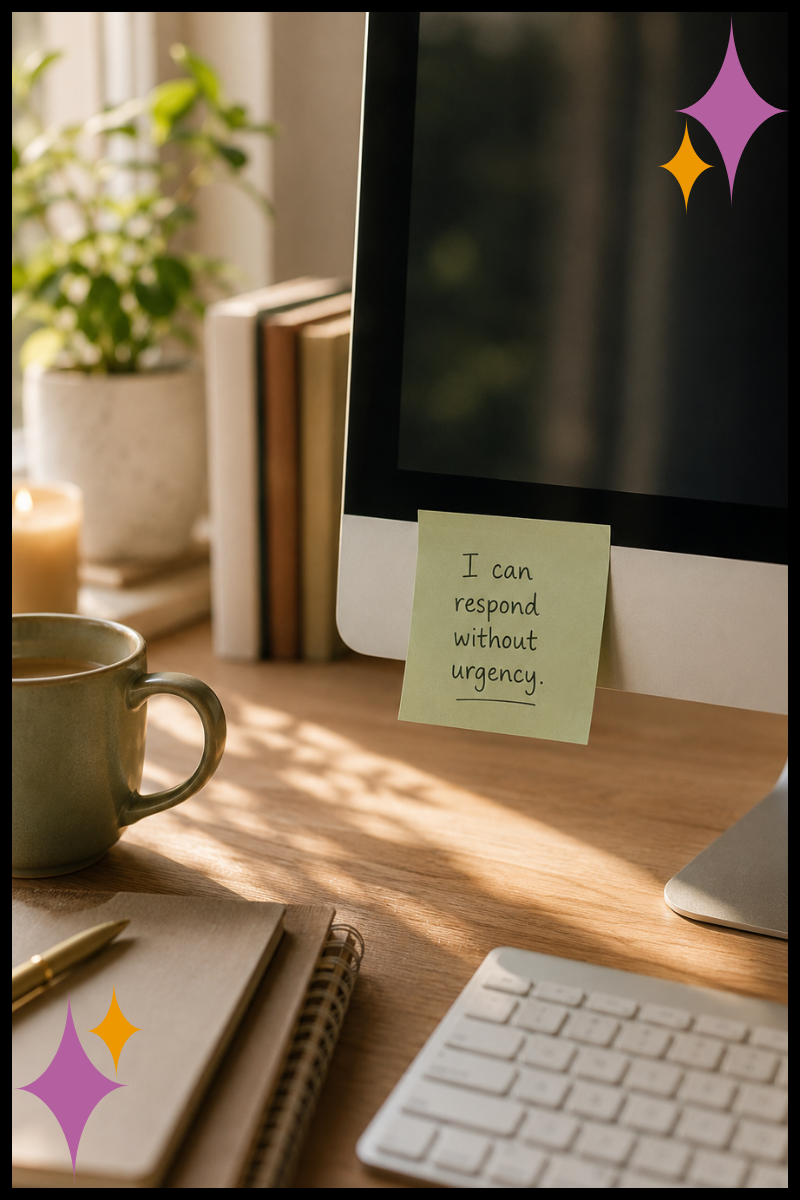
Soft Start Mondays. Protect the first 60 to 90 minutes of your week. No sessions, just a check-in with yourself before you check on anyone else. In agency or group settings, even fifteen protected minutes can change the day. Ask your supervisor how you might begin with space instead of a sprint.
One support day. Pick a day, or a half day, with no clinical work. Don't make it precious, make it consistent, consistent enough that your body learns to expect support there and knows it can return when everything speeds back up.
Anchoring phrases. Pair a short phrase with a task you do on autopilot. Before billing, this creates space for me. Before email, I can respond without urgency. Repeated enough, these become part of how you regulate, a small cue that you're the one steering.
The rhythm you should protect first
Take a breath, and put your feet on the floor if you can.

Now find the one rhythm already steadying you this week. The batched sessions, the phoneless walk, the pause before calls. You didn't read it in a productivity book. Your nervous system built it. That's your starting point.
Name it. Protect it. Build one small system around it so it stops running on luck. That's what a sustainable therapy practice is actually made of, and it's the most honest therapist burnout prevention there is. Not doing more. Protecting what already works so the cumulative weight of this work has somewhere to go.
You don't have to protect them alone
Being human is not the inefficiency in your practice. It's the instrument. You were never meant to carry vicarious trauma in isolation, and you were never meant to out-optimize a load that's relational by nature.

Inside The BRAVE Trauma Therapist Collective, this is the work we do together. Not a planner and good luck, but real rhythms protected alongside people who carry the same weight and get it.
If that's the support you've been missing, come build it with us. And if you're not ready yet, no pressure. Start by seeing where the load is landing with the free Vicarious Trauma Tracker, or find the rest of this series on My YouTube channel. When a rhythm here clicks for you, share it with us in the community. Naming it out loud is where this starts.