The 3 Cs of Resilience for Trauma Therapist Teams (What You're Already Doing for Clients but Not for Each Other)
You spent the morning attuning to a client who could not make eye contact for the first fifteen minutes, softening your voice without even thinking about it, slowing your breathing so theirs could find a steadier rhythm, and tracking their nervous system with the kind of precision some people use to read weather. Throughout the session, you adjusted in subtle, almost automatic ways so the room stayed regulated enough for the work to happen.

And then you walked out, grabbed a cold coffee, and answered three Slack messages with the word “fine.”
That contrast is the gap many trauma therapists are living inside right now,even if we do not always say it out loud. We know how to co-regulate, build connection, and communicate through difficult things because we do it every hour of every clinical day, often with people we barely know, and most of us are very good at it.
What is harder to acknowledge is that we rarely bring those same relational skills into our relationships with colleagues, and even more rarely experience that kind of attunement being offered back to us
That gap is what resilience-based team training is actually trying to close.
Why "Team" Looks Different in 2026
A note before the framework, because the word "team" has shifted underneath us. Plenty of trauma therapists reading this don't have a team in the way that word used to mean. Private practice keeps expanding, group practices are smaller and more dispersed, and supervision happens over video with someone two time zones away.
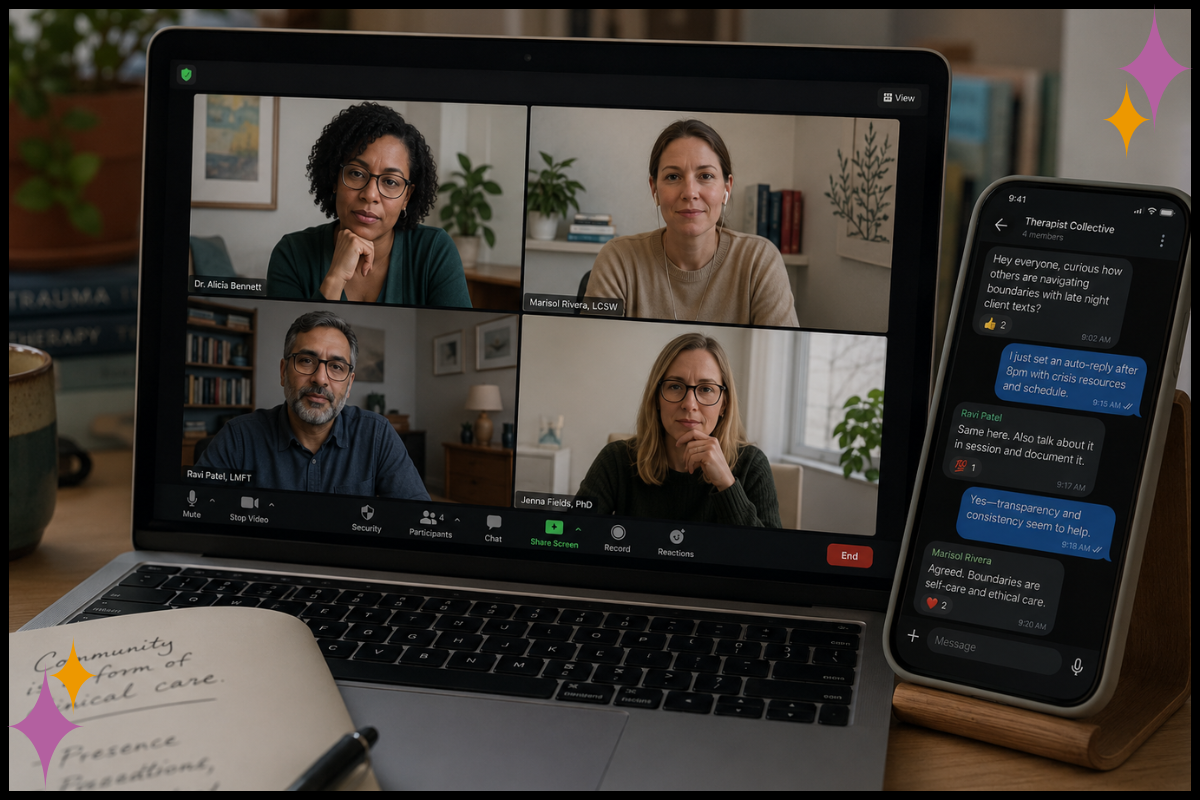
Your colleagues might be a handful of people you text after a hard case, a consultation group that meets every other Friday, and a few clinicians you trust enough to be honest with in DMs.
That counts. The three Cs apply whether you sit in a building with twenty other clinicians or whether your professional community is a small circle you've assembled on purpose because no one assembled it for you. What follows isn't about organizational charts but about the relationships that are supposed to make this work survivable, and what tends to happen inside them when nobody's paying attention.
The First C: Co-Regulation, and What It Actually Costs
Co-regulation is the thing that happens between two nervous systems when one starts moving toward the other. Your breath slows and your client begins to follow. A colleague walks into your office vibrating with activation and within ten minutes the room has steadied because you didn't. In Brainspotting we call it attunement. In developmental research it shows up as dyadic regulation. The mechanism is the same, and you already know how to do it.
Here's the part that doesn't get said often enough, and that I think a lot of seasoned clinicians have been feeling for a while without quite naming: co-regulation is not free.
When you stay grounded so a colleague can come down, your nervous system is doing real work. When a team leader holds steady during a hard moment in a staff meeting, they are spending something to do that. If the flow only ever moves in one direction inside a team, the relationship isn't really co-regulating anymore. It's extraction with better lighting.
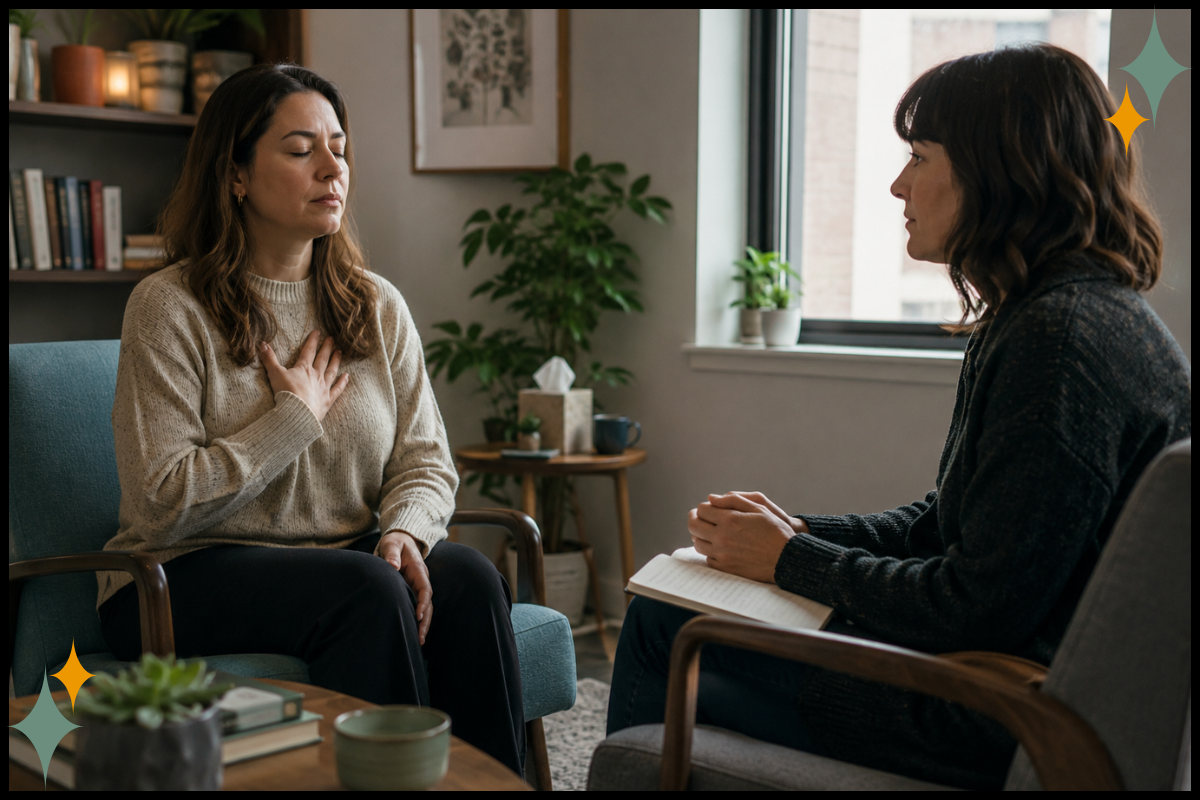
Teams that actually buffer trauma work move the current both ways; not perfectly, not in every interaction, but across weeks and months everyone gets a turn being the one who needs to be met. That reciprocity is what separates a team that holds its people from a team where two or three quietly steady clinicians carry the rest until they burn out or leave the field altogether.
A few small ways to start, in case you're looking for a place to put your hands.
Open meetings with thirty seconds of shared breath before anyone touches the agenda, not a wellness ritual, just everyone arriving in their bodies together.
After a hard case, name what happened together for five minutes, not problem-solving, not consultation, just naming with witnesses.
When the room feels too tight to talk, move. Stand up, walk to a window, shake out your arms together if you can stand the silliness of it.
You teach this all day, and you're allowed to use it on yourself.
The Second C: Connection, and the Cost of Skipping It
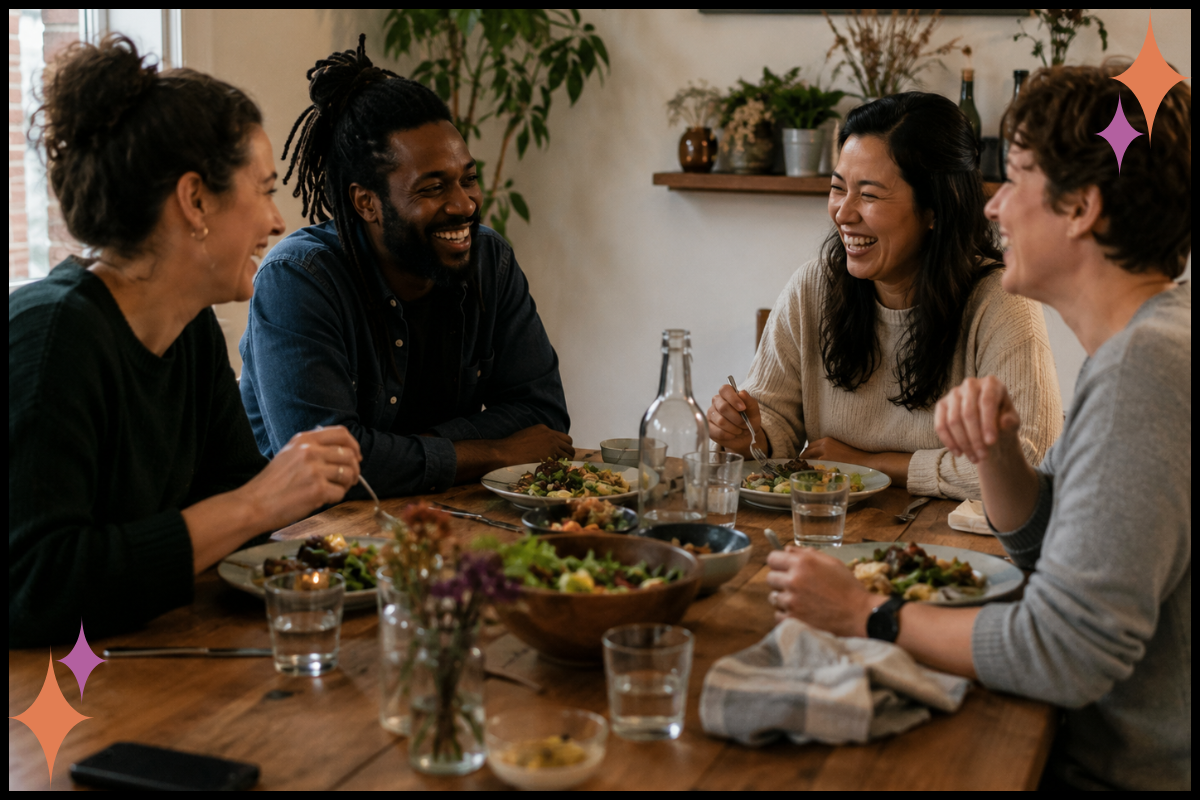
Connection is the part where the people you work with actually know you as a person, and you know them. It is not the same as collaboration, which is something else and a lower bar. You can collaborate with someone you've never had a real conversation with, but you cannot co-regulate with them when something hard happens, because the relationship doesn't have the substrate to hold it.
This is the C that tends to disappear first when caseloads tighten and the days begin to compress. Lunch turns into a desk salad eaten between notes, the quick hallway conversations fade away, and “How are you, really?” slowly gets replaced by a thumbs-up emoji. Most of the time, nobody notices the shift right away because none of those small disappearances feel catastrophic on their own.
What becomes catastrophic is the accumulation: months or years of tiny disconnections that gradually create a team of people working beside each other without actually knowing one another anymore.
The hard part is that connection requires ordinary, unglamorous time, the kind that does not bill and that productivity-driven cultures constantly frame as expendable. It lives in a few minutes at the beginning of a meeting where someone shares something good, professionally or personally.
It grows through practices like naming specific appreciation for a colleague’s work out loud, or protecting a standing lunch where the only rule is that nobody talks about clients. On paper, these things can look small or optional, but in reality they are often the load-bearing parts of a team that is able to stay connected, human, and sustainable over time.
The Third C: Communication, and Why Avoidance Compounds
This is the one most teams quietly fail at, and I think we should be more honest about why.
We teach clients to name their emotions, to ask for what they need, to set boundaries with the people they love. Then we walk into a team meeting and stew silently because someone made a comment two months ago that we never addressed, and now we don't know how to bring it up without it being a whole thing. We coach a couple through repair on a Tuesday afternoon and avoid our supervisor's last email on Tuesday night. We are not unaware of the pattern. We are running it anyway.
Avoided conversations don't stay still, they get heavier over time, and they start affecting case discussions, which referrals get sent where, who feels safe asking for help, who gets quietly left out of certain meetings. By the time the avoidance is visible in the team dynamics, the trust underneath it is already most of the way gone.
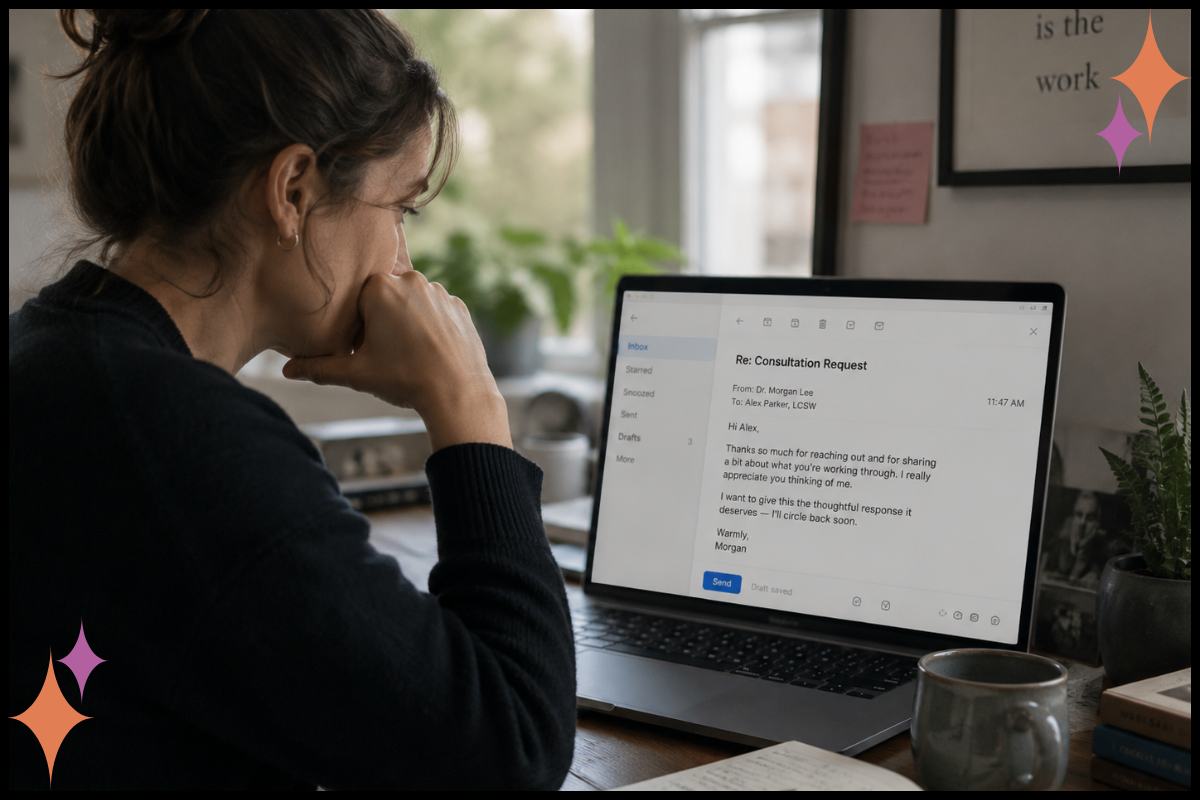
Resilient communication isn't conflict-free communication. It's a working agreement, often unspoken, that says we will have the hard conversation and the relationship will survive it. That agreement has to be modeled by leaders before anyone underneath them will live it.
If the people at the top of your organization can't tolerate being given feedback, no one beneath them is going to risk giving any.
A few ways in: Use a frame when you don't trust yourself to find one, because the three questions of what's working, what's not, and what could change can move a vague feeling into something you can actually discuss without it becoming personal. Practice in low stakes, because the "best pizza topping" debate is not silly, it's exposure therapy for disagreement, and teams that can play at conflict can do conflict when it counts.
If you are a leader, take feedback in front of your team, visibly, without defending, on a regular basis. That one repeated act will do more for your team's communication than any training you'll ever pay for.
What You're Actually Being Asked to Do
The task underneath this whole framework is small and large at the same time.

The small version: take the skills you already deploy thirty hours a week with clients and start using them on the three or four humans you work with most closely. You don't need to learn anything new. You need to redirect what's already there.
The large version: trust that being human with your colleagues is allowed. That the version of you that shows up steady for clients is allowed to be steadied. That asking a coworker how they actually are, and waiting for the actual answer, isn't a distraction from the work. It is the work, just the part of it that no one trained us to value the same way.
This is what we mean by Be Human, Build Resilience, So You Can Stay in the Work You Love. The being-human part was always plural. We just got used to doing it in one direction.
A Question for You

Of the three, which one does your team or your chosen circle of colleagues do best right now? Which is the one nobody's protecting? Share with us in the comments. Naming the gap out loud, with witnesses, is often the first move toward closing it.
If you want to take this further, The BRAVE Trauma Therapist Collective is the community where this happens on purpose, with consultation, training, and the kind of professional connection that's harder to build alone. We also work directly with group practices, agencies, and organizations that want to build this into their team culture instead of hoping it shows up on its own. Reach out here if that's where you are.
You weren't meant to do this work in isolation. You weren't meant to do it in a one-way flow either. There's a third option, and it's already inside the skills you use every single day.