What is EMDR?
EMDR (Eye Movement Desensitization and Reprocessing) is a therapy used to help people work through stress, trauma, and PTSD.
Many people turn to EMDR when they feel stuck, triggered, or reactive in ways they can’t control, even long after something stressful or traumatic has happened.
Often, the people I work with say some version of, “I know what happened. I understand it. I just don’t feel any better.” EMDR helps those responses shift over time, so life starts to feel more manageable again.
As an EMDR therapist, I’ve had the privilege of walking alongside many people as they make sense of reactions that once felt confusing, frustrating, or even frightening. I’ve found that people often come to EMDR after trying many other things, sometimes years of them, and wondering why their body still reacts the way it does.
This blog is meant to help make sense of that experience.
I’ll share how trauma can get “stuck” in the brain and body, what EMDR is actually designed to do, and what to know if you’re thinking about starting this kind of work.
My hope is that by the end, you’ll have a clearer understanding of whether EMDR might be supportive for you, and a bit more compassion for your nervous system along the way. And whether you’re here for yourself or because you support others through trauma, I hope this helps you feel more oriented and better equipped to decide what makes sense for you.

When Time and Talking Aren’t Enough
One of the most confusing parts of trauma recovery is realizing that time alone doesn’t always fix things.

There’s a common belief that if something happened years ago (or if you’ve already talked about it in therapy) your reactions should have settled by now. And when they haven’t, people tend to turn that frustration inward.
“I should be over this.”
“Other people have been through worse.”
“Why is my body still reacting like this?”
These reactions aren’t a personal failure or a lack of strength. They’re a sign that your nervous system learned something during an overwhelming experience and hasn’t had the opportunity to fully update since.
Trauma isn’t just about what happened. It’s about how your system adapted in order to survive.
How Trauma Lives in the Brain and the Body
When something is too much, too fast, or happens without enough support, the nervous system shifts into survival mode.
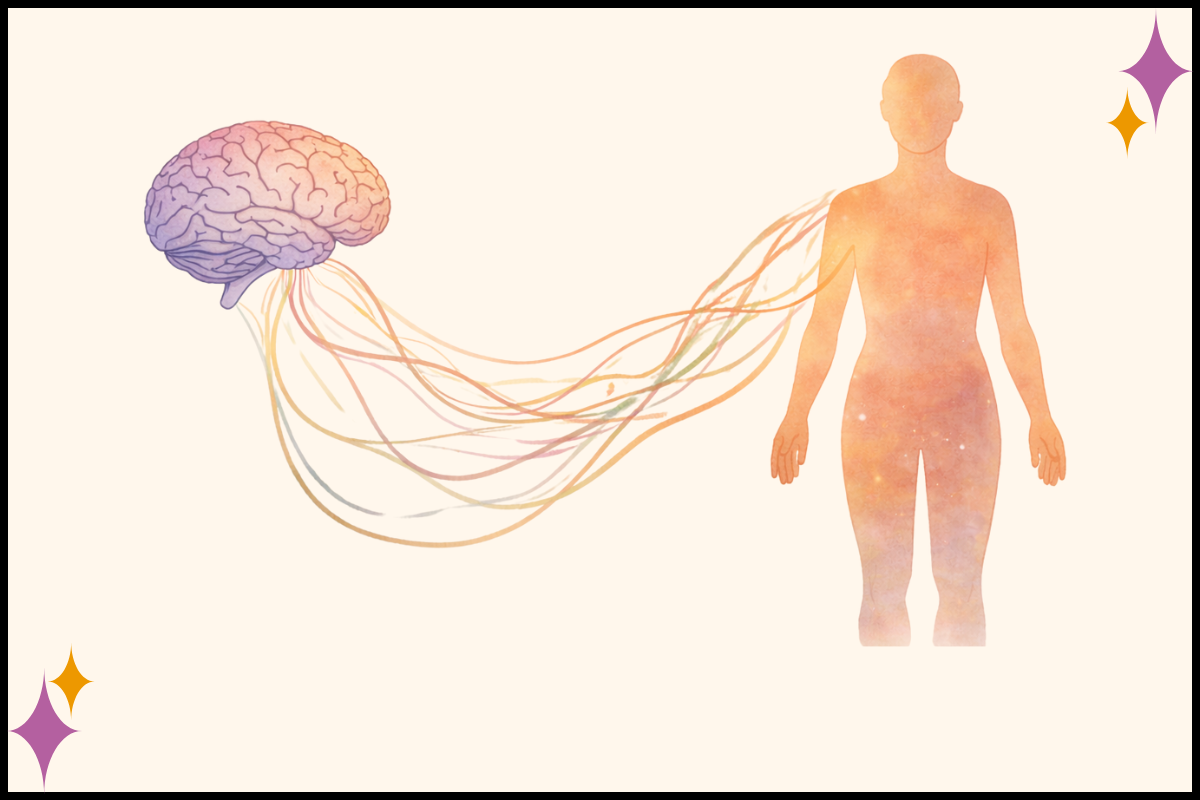
Survival mode is very good at keeping us alive, it’s just not very good at standing down once the danger has passed.
Many people who seek out EMDR have already done therapy. They’ve talked through what happened, they understand the context, they may even have a lot of insight.
And still, their body reacts.
Their heart races
Their muscles tense
They feel numb or shut down
They get overwhelmed in situations that don’t logically feel dangerous
I hear this all the time: “I get it in my head, I just don’t believe it.”
That’s because trauma doesn’t live in just one part of us. Some parts of the brain work with language, story, and meaning. Other parts focus on threat, sensation, and survival. And our bodies carry the imprint of what we’ve lived through, sometimes long after the event is over.
Talk therapy can be incredibly helpful for understanding ourselves. But insight alone doesn’t always reach the parts of the brain and body that learned how to survive under threat.
This is where EMDR can help bridge that gap.
What EMDR Actually Helps With
EMDR works by helping the brain process experiences that weren’t fully processed at the time they happened.
When an experience is overwhelming, it can get stored in a raw, unintegrated way. Instead of becoming a memory that feels finished, it stays linked to strong emotions, physical sensations, and beliefs about safety, control, or self-worth.
That’s why something relatively small in the present can trigger a reaction that feels much bigger than the situation calls for.

The nervous system isn’t responding to now. It’s responding to then.
EMDR helps those experiences move from feeling immediate and intrusive to feeling more distant and resolved. People don’t forget what happened and the memory doesn’t disappear but it does change how it lives in the body.
Over time, the memory carries less charge, takes up less space, and stops running the show.
Bilateral Stimulation (Explained Without Weirdness)

EMDR stands for Eye Movement Desensitization and Reprocessing. The name refers to something called bilateral stimulation, which is one part of the process.
Bilateral stimulation might involve guided eye movements left and right, tapping back and forth, or alternating sounds. From the outside, it can look unusual, and it’s completely reasonable to feel skeptical at first.
What matters isn’t the form itself, but what it supports internally.
Bilateral stimulation creates a gentle rhythm that engages both sides of the brain while attention stays anchored in the present. This can help the brain make new connections and integrate information that was previously stuck.
It also places a mild demand on working memory. In simple terms, part of your attention is occupied while you’re processing something difficult, which can help prevent your nervous system from going into the full trauma response it’s used to.
It’s important to clarify this: EMDR is not just bilateral stimulation.
A well-trained EMDR therapist spends significant time on preparation, resourcing, and pacing. Those phases are not optional, and they are very much part of EMDR.
Common Fears About EMDR (And What Actually Matters)
Many people feel nervous about starting EMDR, especially if they’ve been living with trauma for a long time.
Common fears include:
Losing control
Becoming overwhelmed
Opening something that can’t be closed
These fears make sense, and they’re protective!
EMDR should never involve forcing someone to relive trauma in graphic detail. You don’t need to remember everything and you don’t need to share every detail.
The goal is not catharsis; it’s to metabolize the past so it can be integrated into the present.
That means staying oriented to the here and now. A skilled EMDR therapist works carefully to keep the process within a window that feels manageable. If something feels destabilizing, that’s a signal to slow down or adjust, not to push harder.

A Note for Therapists
If you’re a therapist reading this, it’s important to say this clearly: EMDR is not a shortcut, and it’s not a technique that works independently of the relationship.

Attunement matters.
Pacing matters.
Consent matters.
The therapist’s own regulation matters.
EMDR works best when it’s embedded in a thoughtful, relational approach to trauma treatment. Preparation is not optional. Neither is support for the therapist doing the work.
When EMDR is practiced well, it respects both the client’s capacity and the therapist’s limits.
How to Know If EMDR Might Be a Fit

EMDR may be a good fit if your reactions feel bigger than the present moment, or if your body seems to be responding to danger that isn’t actually happening now.
It can be helpful if you’ve gained insight over time or through other therapies but still feel activated, numb, or stuck in patterns that don’t make sense to you.
At the same time, EMDR isn’t always the right starting point. Sometimes stabilization, resourcing, or other approaches are needed first. And so, timing, readiness, and support matter.
EMDR isn’t an identity, and it isn’t a cure-all. It’s a tool. And like any tool, it works best when it’s used intentionally and with care.
Conversation, Not Conversion
If you’re curious about EMDR, the next step is usually a conversation. That might be with your current therapist or with a therapist trained in EMDR, to talk through whether it fits your needs and where you are right now.
And if you’re a trauma therapist reading this and thinking about training or community, I’d invite you to reflect not just on the model, but on the kind of support you want around you as you do this work.

Trauma therapy is demanding. EMDR can be powerful. And it’s most sustainable when it’s practiced in community, with space for reflection, consultation, and being human.
Whether you’re a client looking for support or a trauma therapist looking for community, you can learn more at braveproviders.com/brave.