Why "Just Take Time Off" Doesn't Work for Trauma Therapists
You finally took the vacation, went somewhere beautiful, turned off your email, and gave yourself full permission to rest, only to come home feeling just as exhausted as when you left, maybe even more so.
Now, instead of relief, there is a sharper awareness of how tired you actually are, paired with the reality of returning to the same caseload that depleted you in the first place.

If this has happened to you, I want you to know that you are not bad at resting.The advice to “just take time off” when you’re burned out was never designed for the kind of exhaustion you are carrying.
Sure, it’s well-meaning and it’s what supervisors say when they notice you struggling and what colleagues suggest when you are running on fumes. But for trauma therapists, it often misses the point entirely.
Being this depleted does not simply come from too many hours on the clock but from absorbing pain without a place to put it (and without the kind of support that allows you to process and receive it).
And no amount of time at the beach can fill your cup all the way back up.
Why Does Time Off Fall Short for Trauma Therapists?

Time off fails trauma therapists because vicarious trauma isn't a scheduling problem but a nervous system problem, a relational problem, and often an organizational problem.
Rest sure does address hours but it doesn't address exposure, isolation, or accumulation. Let me break down exactly why standard rest doesn't touch the real exhaustion.
Vicarious Trauma Lives in the Body
Vicarious trauma is stored in the nervous system, not the office, which means it travels with you wherever you go, even on vacation.
The weight you carry from trauma work is not sitting in your therapy room or your EMR; it lives in your body: in the tension in your shoulders that won’t release, the disrupted sleep that follows you across time zones, and the low-grade hypervigilance that keeps you scanning every room even when you are supposed to be relaxing.
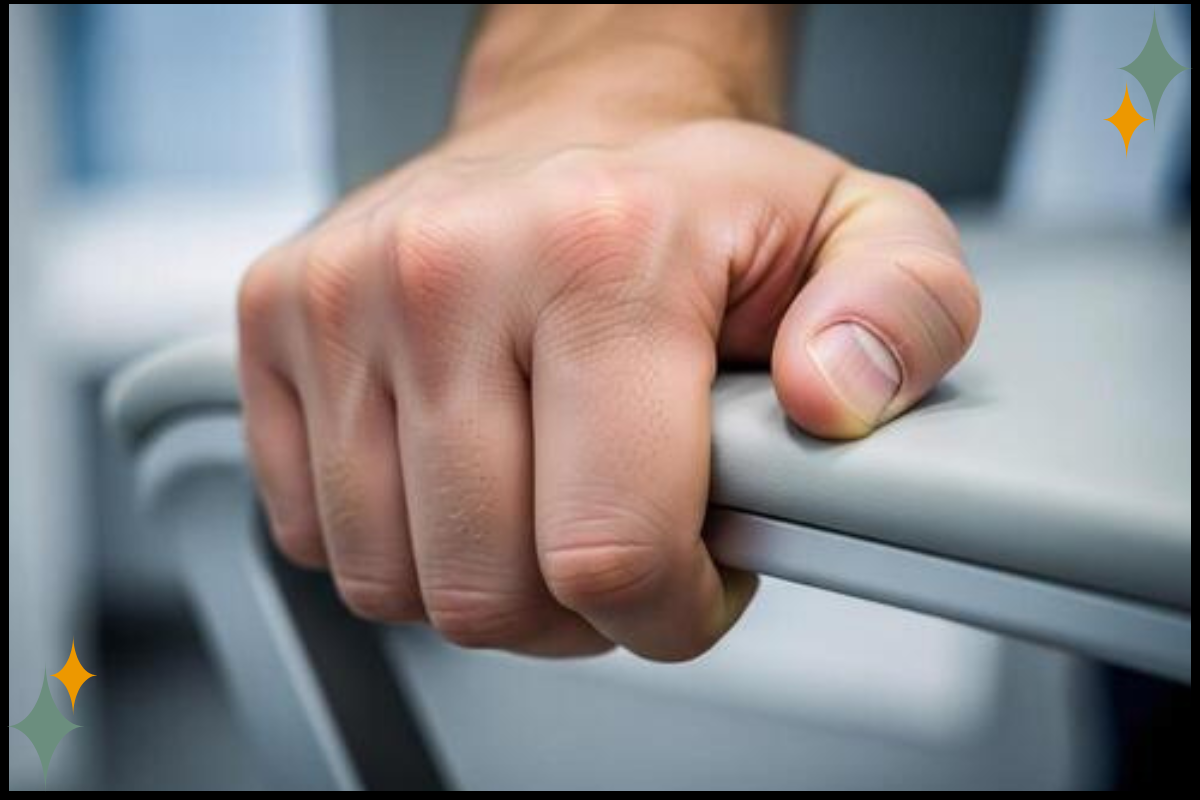
You can fly across the country or spend time somewhere beautiful with people you love, but your body comes with you.
This is not a mindset problem; it is physiology. Your nervous system has been doing its job session after session, absorbing, holding, and protecting - and it does not simply stop because the calendar says “out of office.”
Your Nervous System Doesn't Know You're on Vacation
Your nervous system has learned to stay ready through repeated exposure to traumatic material, and it does not simply switch off because the setting changes.

You can be sitting somewhere peaceful with nothing objectively wrong, yet still feel your body bracing, scanning, and holding tension you did not fully notice until you tried to let it go.
Rest requires more than a change of scenery; it asks for your nervous system to feel safe enough to release what it has been carrying. For many trauma therapists, that kind of safety does not come from location alone, but from being held, witnessed, and supported in ways that match the weight of the work. And if you have ever tried to relax only to feel your body refuse, that is not resistance, it is protection, your system doing exactly what it has learned to do.
What's the Difference Between Resting and Recovering?
Rest without processing is a pause, not true recovery, because what accumulates in your system stays there until it is actually metabolized and there is a real difference between stopping and processing; time off can create space from the daily demands of sessions, notes, and the emotional labor of holding other people’s pain, but it does not automatically resolve what has been absorbed.
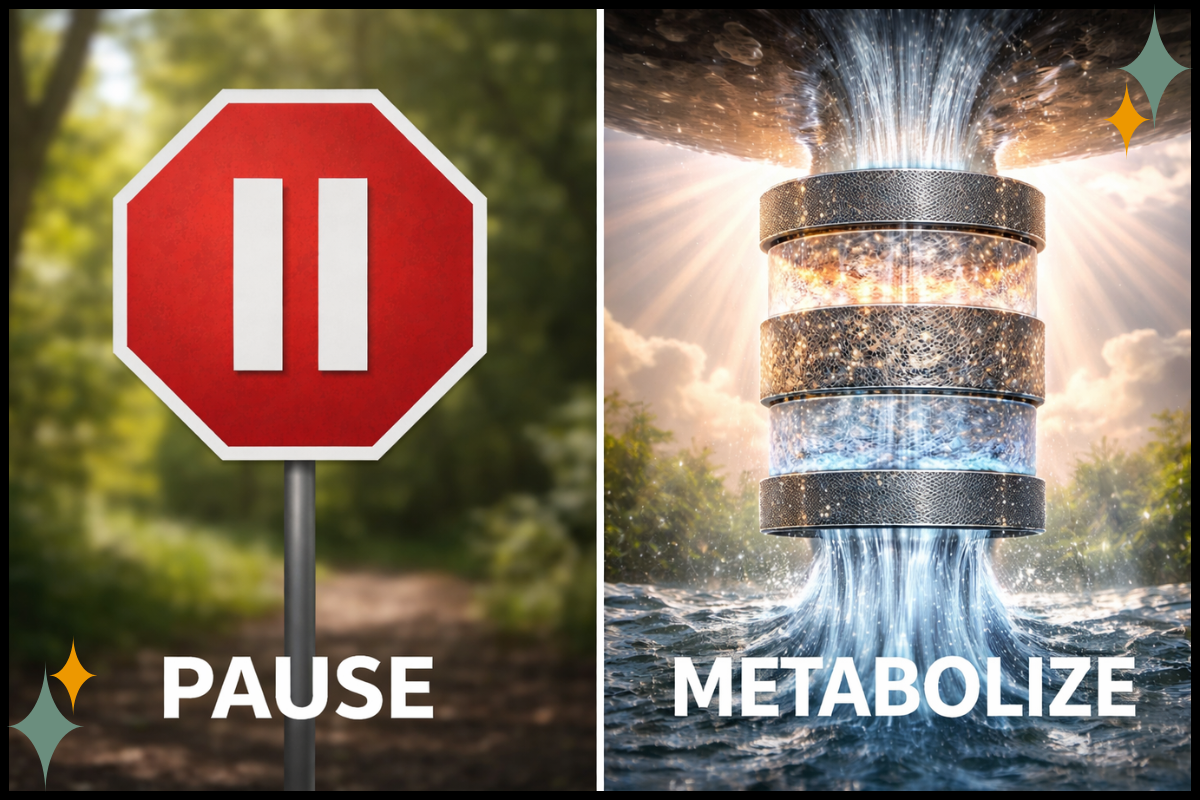
If there is no space to name what you have been carrying, to feel it, and to make sense of it with someone who understands the weight of the work, then it remains in your system, waiting.
You might feel a little better after time away: more spacious, more rested, but that relief often fades quickly once you return, because the accumulation has not actually moved, it has only gone quiet.
Processing requires more than time; it calls for intention and relationship, for someone who can hold what you have been holding so that you do not have to carry it alone.
Therapist Exhaustion Isn't About Hours
The strain of trauma work comes less from volume and more from emotional exposure, which means you can have a relatively light caseload and still carry the weight of someone’s worst memories.

Most workplaces try to measure strain through time: how many hours you worked, how many clients you saw, whether your schedule needs adjusting, but trauma work does not follow that kind of math.
You can have a lighter week on paper and still feel gutted by a single session, or see fewer clients than your colleagues and still carry images, details, and grief that now live in your awareness. That is because the strain is not about volume; it is about emotional exposure, which is harder to measure, harder to see, and easier to overlook when wellbeing is assessed by schedules rather than by what those hours actually hold.
You Can't Unsee What Clients Have Shared
There is no reset button for traumatic material once you have received it. Time away does not erase knowing, which means what therapists often need is not forgetting, but integration.

The images, the details, and the stories entrusted to you in moments of deep vulnerability do not stay behind when you leave the office; they become part of your memory and your understanding of what humans survive.
A week at the beach cannot undo that kind of knowing, but what actually helps is the ability to integrate it, to make meaning of what you have witnessed so it becomes something you can hold without it taking over.
That kind of integration requires space to process with people who understand the weight of what you are carrying. Supervision can support the case, but it does not always hold the therapist.
The Work Shadows You Even When You're Away

Anticipatory dread about returning can quietly interfere with rest, because part of your brain stays braced for re-entry even while you are away. Even on vacation, there is an awareness that you will be going back to the difficult client, the filling inbox, and the emotional weight of stepping into it all again, so the experience becomes shadowed by anticipation rather than fully lived in the present.
For many trauma therapists, this means coming back from time off can feel worse than when they left, not because the rest did not help, but because the return lands harder once there has been space to feel how tired they actually are.
Time away can open a window, but if the structure you are returning to remains unchanged, that window tends to close quickly.
Why Doesn't Time Off Fix Professional Isolation?
Vacation does not provide collegial support or a space for processing, because professional isolation is a relational gap, not a scheduling problem.
One of the deepest sources of exhaustion in trauma work is not the clients themselves, but the experience of carrying it alone: walking out of a hard session with no one to turn to, holding something heavy and wondering if you are the only one struggling, or slowly feeling like no one truly understands what you are going through, even when you are surrounded by other clinicians.

Time off does not resolve that kind of isolation. A week away cannot offer you a colleague who understands or create a space where you can say the hard thing out loud and be met with recognition instead of concern.
Most organizations are not structured to support clinicians in processing together; case consultation exists, but it centers the client, often leaving the therapist, the human in the room absorbing all of it without a place to land.
When that space is missing, time off may give you a break from the isolation, but it does not heal it. If you want to start tracking how this work is showing up for you, I created a free Vicarious Trauma Tracker you can use on your own or bring into a team space to open a more honest, grounded conversation.
Guilt and Hyperresponsibility Don't Take Vacations
Internal pressure to stay available does not automatically pause when you go on PTO, especially within workplace cultures that subtly reinforce overwork and make true disconnection feel difficult.
Many trauma therapists find it hard to be fully present when they are away, thinking about the client in crisis, the one who was not scheduled before they left, or checking their phone while running scenarios and holding a quiet sense of guilt about not being available.

That kind of hyperresponsibility does not simply switch off because the calendar says vacation. Some of it is internal, shaped by patterns of over-functioning, feeling indispensable, or tying worth to availability, but some of it is structural, reinforced by systems that reward overwork and under-resourcing, even if unintentionally.
In cultures where taking time off comes with a cost, asking clinicians to “unplug” places the burden of rest on the person who is already stretched too thin.
When Organizations Don't Know What Else to Offer
“Take time off” often becomes the default response when organizations lack tools for addressing vicarious trauma as an occupational reality, placing the burden back on the clinician.
This is not about bad leadership, most clinical directors and supervisors genuinely care, they see the exhaustion, and they want to help, so they reach for what is available to them: time off, reduced caseloads, and encouragement toward self-care.

The challenge is that these tools were designed for a different kind of tired. They assume the issue is bandwidth, when in reality vicarious trauma is an occupational reality rather than a personal failure.
When PTO becomes the primary solution, it can unintentionally communicate that the system is fine and the individual simply needs to rest more.
What is actually needed is a shared language for what clinicians are carrying, along with practical tools that can be used in real time and team-based practices that make it normal to talk about the weight of this work: not as weakness, but as evidence of being human and engaged.
That kind of support is not something any one clinician can build alone.
What Actually Helps Trauma Therapists Recover?

Real recovery requires processing, nervous system support, and relational connection with people who understand the work. Organizations can build this into team culture through shared language and repeatable practices.
If time off hasn't been working, it's not because you're doing rest wrong but because the kind of exhaustion you're carrying needs more than a break. It needs:
Processing space with people who understand
Nervous system support that helps your body actually let go
Relational connection that reduces isolation
Organizational structures that treat vicarious trauma as normal, not shameful
That last piece matters because individual therapists can only do so much when the systems around them keep offering the wrong solutions.
Where Do We Go From Here?
If you're a trauma therapist reading this, I hope you feel a little less like the problem. I want you to know that time off isn't working because it was never built for what you're carrying.
And if you're a clinical director, supervisor, or practice owner, or a clinician who wishes your organization understood this, I want you to know there's a way forward.

I developed something called The BRAVE Method specifically for this. It's a framework I bring into organizations to help trauma therapists buildvicarious resilience without pretending the work isn't hard. It gives teams shared language, practical tools, and repeatable support practices that address vicarious trauma as an occupational reality.
If you want to learn more aboutbringing The BRAVE Method into your organization, I'd love to talk with you about what your team needs, and if you're looking for support right now,The BRAVE Trauma Therapist Collective is where trauma therapists come to be human together. It's not another thing on your to-do list. It's a place where you don't have to explain why you're tired.
Wherever you are in this, thanks for doing this work and for caring enough to look for something better than "just take some time off.”