
15 Examples of Vicarious Resilience in Therapy You Can Start Noticing This Week
Trauma therapists are trained to track what’s hard. We notice dysregulation, shutdown, rupture, avoidance, and risk because that’s part of doing careful, responsible work. Our attention goes to what could fray, what might escalate, what still needs fixing. Over time, that focus shapes our own nervous systems, and if we’re not careful, it can start to feel like pain is all we ever see.
But trauma work isn’t only exposure to distress. Every day, clients reveal courage, adaptation, and growth after unimaginable experiences. They return, repair, laughter, set boundaries, and imagine futures they couldn’t before. These moments ripple through the room, and if we allow ourselves to notice, they change us too.
Vicarious resilience is the way your clients’ courage, healing, and adaptation affect you too. It is not the opposite of vicarious trauma. It lives right beside it. And once you start recognizing it in the room, it gets easier to notice in real time, which means you have more access to the part of this work that steadies and renews you.
So, rather than talking about vicarious resilience in the abstract, I want to make it concrete. Here are 15 examples of what it can look like in actual sessions, so you can start picking up on it in your own practice.
1. A client sets a boundary they were never allowed to set before

You hear it in a sentence that would have been unthinkable for them six months ago. “No, I’m not doing that” Or, “I don’t need to explain my decision.” Their voice might shake, their fingers might tighten around the edge of the chair, or they may look at you like they are waiting for the room to punish them for taking up space. But then, nothing bad happens.
That moment is not just communication; it reflects a deeper shift, a kind of permission returning to the body. And often, that shift does not stay contained within the client alone, but lands in us as well, showing up as a quiet, steady sense of settling.
2. A client stays with an emotion they used to avoid

They begin talking about grief, anger, fear, or shame, and you can feel the old pattern starting to surface; usually a client jumps to the story, cracks a joke, or leaves the room without leaving the room. This time, they do something different. They keep breathing, their eyes fill, and their chest rises and falls faster before settling into a steadier rhythm.
From the outside it may look small or even easy to miss, but clinically it is not a small moment at all. What you are witnessing in those seconds is emotional courage unfolding in real time, not simply distress.
3. A client comes back after a difficult session

Not every sign of healing looks like a breakthrough. Sometimes it shows up in quieter ways, like a client coming back the following week after a difficult session, choosing to re-engage rather than withdraw. That kind of return matters because resilience often lives in the act of coming back. And when it happens, it can bring a sense of relief to the therapist’s body as well, especially after the sessions that tend to resonate.
4. A client chooses self-acceptance over approval
They tell you they disappointed someone important. Or they made a hard choice and, for once, did not spend the next ten minutes calling themselves selfish, dramatic, or impossible to love.

You can hear the difference: less backpedaling, less collapse, less begging to be let off the hook for having a need.
These moments can be easy to overlook, but they signal a deeper shift happening inside. This kind of shift tells you that healing is moving beyond behavior and beginning to reach deeper layers, where it starts to touch identity.
5. A client recognizes a pattern that used to control them
A client stops mid-sentence as their face changes in realization, “Oh. I’m doing that thing again." That realization proves that they are no longer fully inside the pattern but that they are watching it happen.
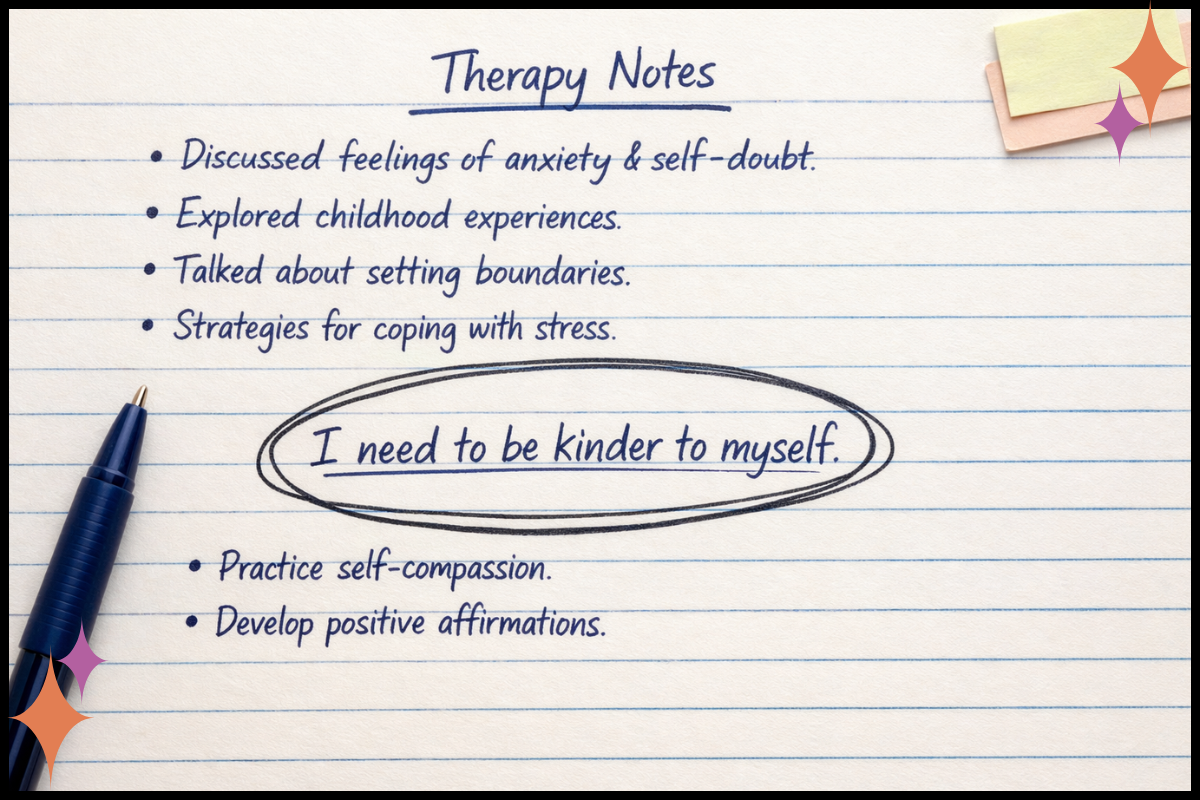
There is a difference between living inside a pattern and being able to see it as it is happening, and that shift in awareness changes the experience entirely. When insight becomes embodied, a sense of agency begins to return, often in subtle but noticeable ways. That moment can feel energizing, because you are witnessing choice come back online in real time.
6. A client takes responsibility without collapsing into shame

They acknowledge harm or a mistake and remain present, without dissolving into guilt or self-criticism.
That is not a small moment; it reflects accountability without self-erasure, and it offers a lived reminder that repair is possible without collapse.
7. A client protects their child differently than they were protected

This one often lands hard. When a client pauses before reacting and chooses protection, attunement, or repair where there used to be repetition, it matters significantly. In that moment, you are not only witnessing the effects of trauma: you are witnessing trauma being interrupted. For many trauma therapists, that experience carries both ache and relief at the same time, a mix that is quietly powerful and deeply meaningful.
8. A client practices regulation between sessions

They used the grounding skill, remembered their breath, and tried the container, the calm place, or the pause; not perfectly, but genuinely.
This shows the work is leaving the room with them, carrying forward in ways that extend beyond the session and into their everyday life.
9. A client starts trusting their own perception again
When a client checks in with themselves instead of asking, “Am I overreacting?”, their inner compass grows a little stronger. Witnessing that process can strengthen something in us as well, especially after a week spent surrounded by confusion, intensity, and pain.

10. A client laughs again

Not nervous laughter, and obviously not the socially polished kind, but real laughter that arrives on its own. These moments can be easy to overlook because they don’t always look clinical, but they matter. Laughter often signals that there is more room in the nervous system than there used to be, and sometimes your own body feels that expansion alongside your client, quietly sharing in the relief, ease, or lightness that emerges in the moment.
11. A client imagines a future they could not imagine before

Sometimes this shows up in just one sentence, a plan, a wish, or a small opening toward something different. Trauma can narrow the sense of the future, but even a flicker of hope begins to widen it again. Every small glimpse matters, because these tiny openings signal the possibility of change, growth, and repair, quietly reminding both client and therapist that resilience can emerge in the smallest of moments.
12. A client repairs a relationship

When they circle back after a rupture and say the thing they usually avoid, choosing honesty over distance, you can feel the shift in the room. The attempt may be messy or incomplete, but it is real, and it’s reflecting a willingness to stay in connection rather than retreat from it.
Repair is rarely polished; it is often awkward, partial, and deeply human. Yet when a client reaches for a different relational outcome, they are doing more than understanding something new, they are practicing a new way of connecting, experiencing relational possibility in real time, and offering themselves and the relationship a chance to shift, however imperfectly.
13. A client notices their own strength
They say, “I handled that better than I used to,” and this time, it does not sound like they are fishing for reassurance but rather, it sounds like they actually believe it a little; and slowly, that realization begins to land.

This moment matters because it helps consolidate growth, and it also changes what you notice as a therapist. You are no longer only tracking pain: you are beginning to see and record capacity, resilience, and the ways clients are learning to navigate their experience differently
14. A client stays present with a painful memory

When a client stays present with a painful memory instead of retreating from it, their nervous system is doing enormous work. This is not about performance, it is about capacity. If you allow yourself to register it, that moment can feel like a small but powerful glimmer in the midst of very hard work, a subtle sign of resilience quietly unfolding in real time.
15. You realize this work has not only exhausted you. It has also deepened you

Many trauma therapists worry that this work will harden them. And sometimes, parts of us do grow tired, defended, or numb. But the opposite happens as well: we become more patient with complexity, more attuned to what people survive, and more able to notice strength in places others might overlook. That is vicarious resilience; not because the work stops costing us, but because it shapes us in multiple directions, revealing growth alongside the challenge.
What to Do With These Moments This Week
Take these examples into your sessions and give yourself permission to notice them by tracking the boundary, the return after a hard session, the laughter, the emotional courage, and the small flickers of hope as they emerge. Then pay attention to your own body and mind when you catch one; notice whether you feel a little steadier, a little softer, or more connected to why you do this work.
And don’t just keep it to yourself. Share one of these moments with another trauma therapist: say, “My client did this today, and it stayed with me” because sharing these moments with another human helps deepen its impact, making it more real and allowing it to land more fully in your nervous system.

This is part of what we do inside BRAVE, where we don’t only talk about what’s hard but also make space for the moments that steady us, so trauma therapists can process, reflect, and actually feel the parts of this work that give something back. If you want a place where these conversations are normal and not an afterthought, you’re welcome to join us inside the BRAVE Trauma Therapist Collective, and if you want a simple place to start, download the free Vicarious Resilience Tracker below to begin catching the glimmers you might otherwise miss.