7 Questions Trauma Therapists Can Ask to Track Vicarious Resilience
What Is Vicarious Resilience?
Vicarious resilience is the positive internal shift that can happen in us as trauma therapists when we witness someone else’s strength and recovery up close, and our nervous system actually takes it in. Not because the work is easy or because sessions are full of “feel good” moments. But because we’re sitting with someone while they do something brave, and our system registers: humans can survive this, humans can change, repair is possible.
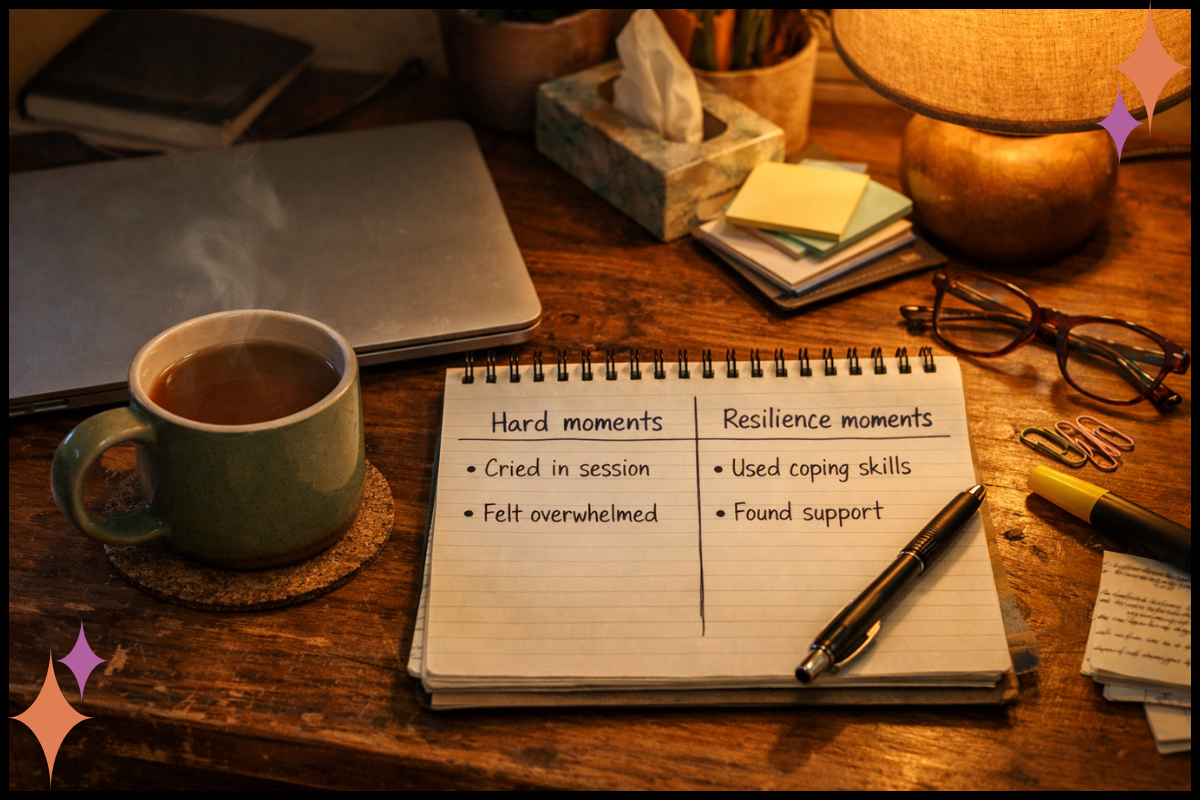
Your nervous system absorbs both: the impact of trauma and the reality that healing can happen. That’s why vicarious trauma and vicarious resilience can coexist in the same body, on the same day, even in the same session.
Why Trauma Therapists Often Miss Vicarious Resilience
For me, there are days I walk away from sessions feeling heavy and I can name every hard thing that happened. Then, later, it hits me:
That 2 o’clock session felt hard because my client set a boundary for the first time and struggled to integrate it
My 9am dissociated a bit less and then felt the activation in their body
My 4pm told me exactly how they felt about our rupture and we worked through it
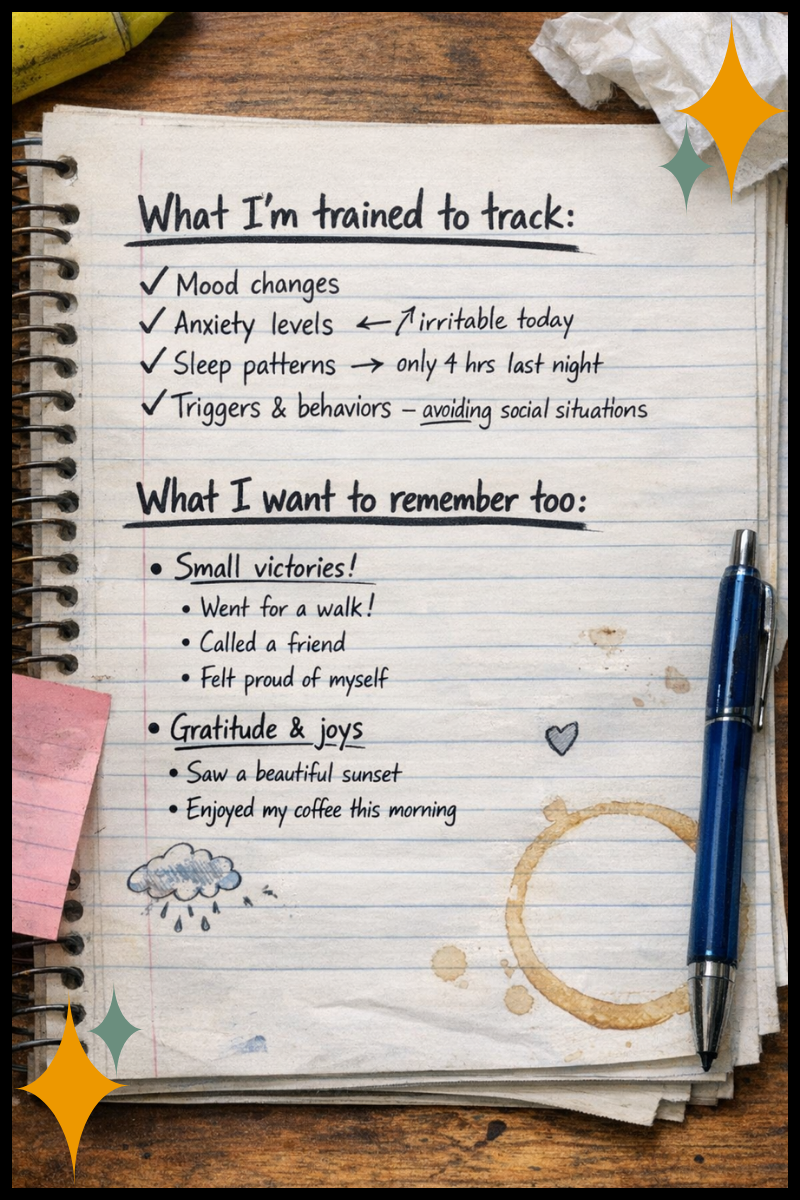
Those are all moments of vicarious resilience and they’re easy to miss because our brains are wired for survival, and our training reinforces that threat-tracking stance. We notice pain, risk, and everything that’s unresolved which is central to your skill as a trauma therapist, and means it can be easy to miss out on the resilience that’s happening too.
Learning how to notice and work with vicarious resilience then, isn’t about saying the hard parts aren’t real. Rather, it’s about helping you to stop missing the protective material that’s showing up right alongside them.
That’s what these seven questions are for - to help you notice vicarious resilience and start installing it so it doesn’t disappear in the pace of your day.
Question 1: What strength did I witness today that I don’t want to forget?
In trauma work, it’s easy for attention to get pulled toward what hurts, what’s unsafe, what’s breaking, what’s unresolved. When we only track pain, our nervous system starts to believe pain is the whole story.
Noticing your client’s strength helps you stay oriented to the full story. Strength doesn’t erase trauma. It sits right next to it.
If this question makes your mind go blank, stay with it for a beat longer.
Strength is often quiet. It might look like showing up when your client wanted to cancel, telling the truth instead of performing, noticing a body sensation for two seconds longer than usual, staying in the room during discomfort, letting you matter a little more than they allowed last month.
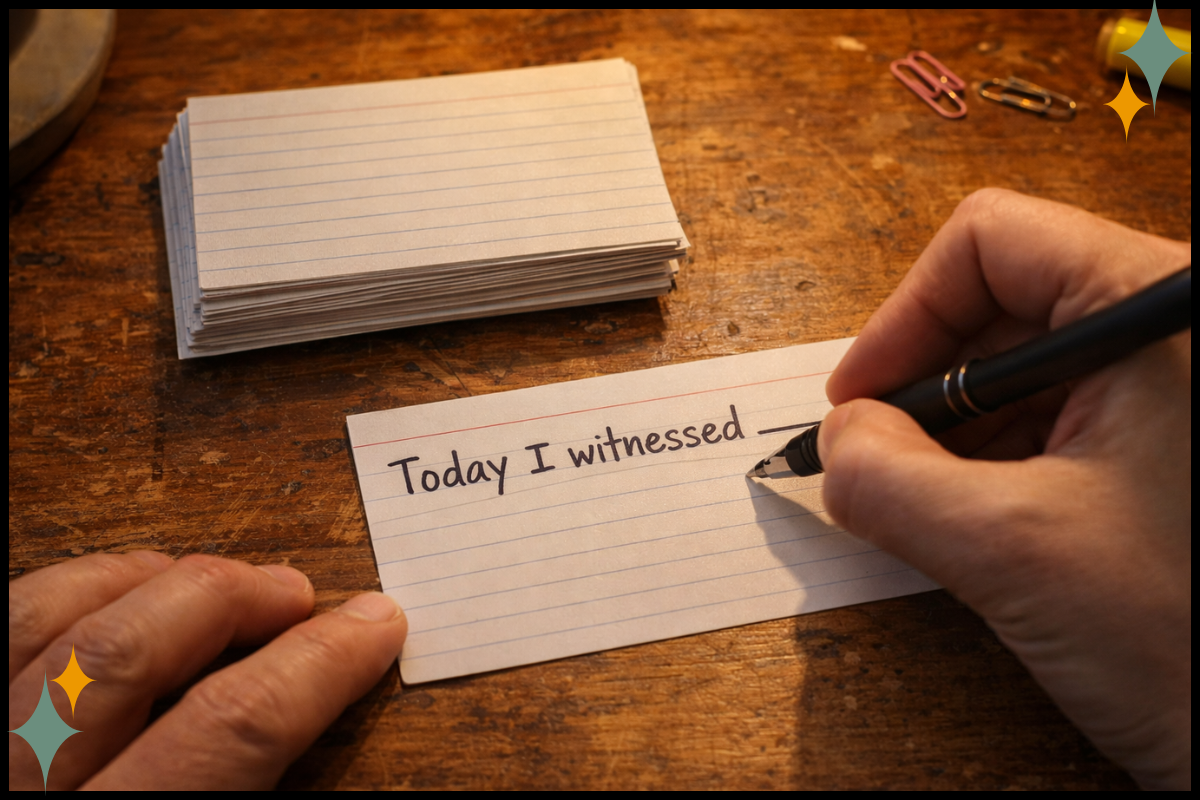
To begin working with this question, use this anchor and fill in the blank - “Today I witnessed ____.”
Jot down the first thing that comes to mind and let’s keep going.
Question 2: How did this client’s courage shift my perspective, even slightly?
Sometimes vicarious resilience doesn’t feel like inspiration. It’s sneakier because your worldview tilts a few degrees but you don’t realize it until later.

Often nothing looks obviously dramatic in session, , when you’re brushing your teeth or making dinner, you might catch yourself thinking: Oh… people can do hard things and keep going. Or: Change can be slow and still be real. Or even: Repair doesn’t require perfection.
This is worth tracking because trauma work can quietly train our brains to scan for what’s fragile and what might fall apart. This question lets your nervous system register the other truth that’s happening in the room: courage is real, and it shapes us.
To anchor this question, answer the following - “Because of this client, I now see ____.”
Question 3: Where did I feel moved instead of drained today?
Emotional intensity is not the same as depletion.
In trauma therapy, there’s a common mix-up because we feel a lot and assume that means we’re depleted. But, emotional intensity and draining aren’t automatically the same thing.
Sometimes the intensity is your system recognizing contact. Something real happened. A client let you matter for a second. A truth landed. A grief was held without being rushed. A protective part softened, just a fraction.
Those moments can bring tears or that lump-in-your-throat feeling. Effortful, yes, but often with a different aftertaste than depletion.
Depletion often feels scattered, foggy, braced, irritated, or numb, as if your body simply wants to retreat from the world.
Being moved feels different. It may feel tender, connected, clearer, or quietly steady, not necessarily “happy,” but meaningful in a way that settles rather than drains.
When every intense moment gets labeled as “too much,” we can start armoring ourselves against the parts of the work that might actually sustain or protect us. This question helps build discernment over time, which matters when you are navigating a career in this work, not just a difficult season.
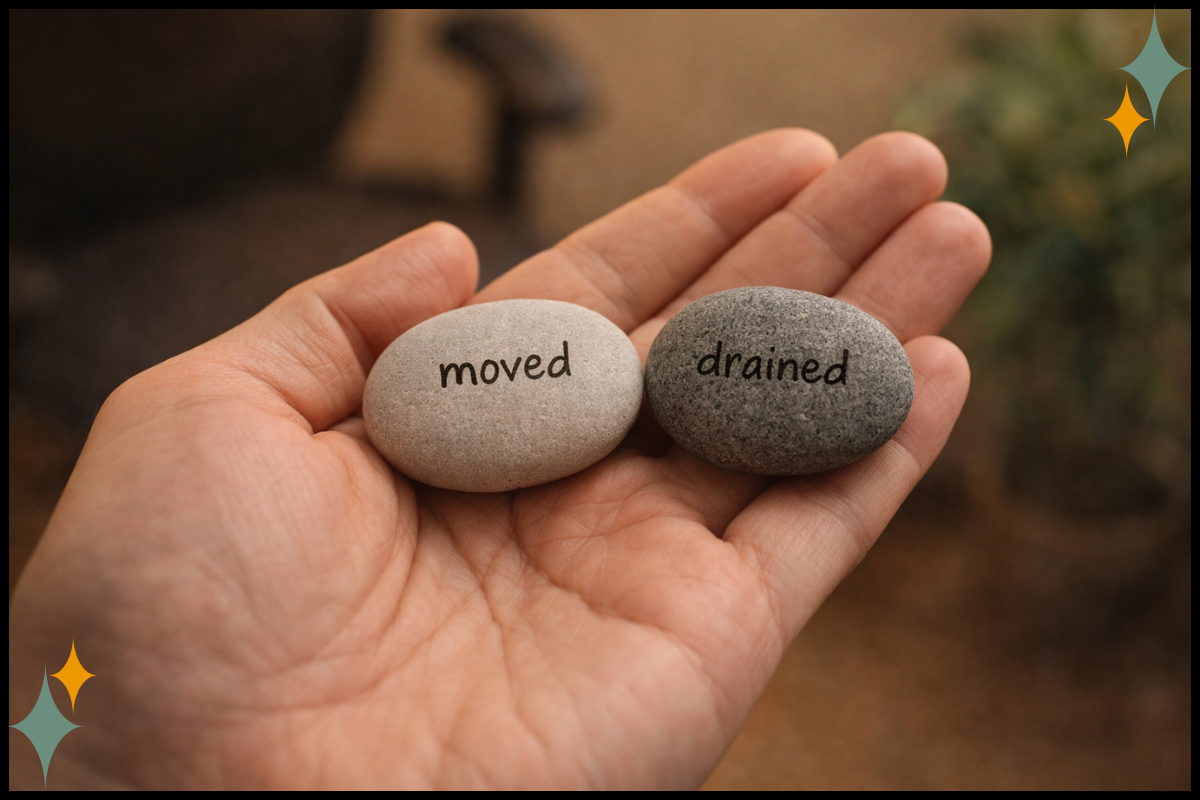
Now work with this anchor to help you notice the difference between being moved and being depleted - “One moment I felt moved was ____.” / “One moment I felt drained was ____.”
Question 4: What belief about people softened for me today?
Trauma work can harden parts of us. Not because we’re cynical, but because we sit close to what happens when people aren’t protected, aren’t believed, and aren't treated with care. Your brain adapts to the world you pay attention to all day.
So when something softens, even a little, it’s worth tracking. Because it's evidence that your worldview can still hold complexity.
It might sound like:

“People don’t always stay stuck.”
“Even after a long time, something can shift.”
“Repair isn’t a fantasy.”
“Safety can be built.”
“Courage can look quiet and still count.”
Often the softening isn’t a thought at all,it’s a somatic response. Like feeling less braced when someone tells you something hard or less dread when a client says, “Something happened this week.” This leads to more curiosity and less catastrophe.
Working with vicarious resilience is then so powerful because it helps to shift what your nervous system starts believing about the world.
As you begin this shifting process, work with this anchor - “A belief that softened for me today was ____.”
Question 5: What did I learn about regulation from my clients today?
Your clients teach you regulation all the time, whether you realize it or not. Not the polished version from textbooks; the real one, inside a nervous system with history, inside a life that still has stress.
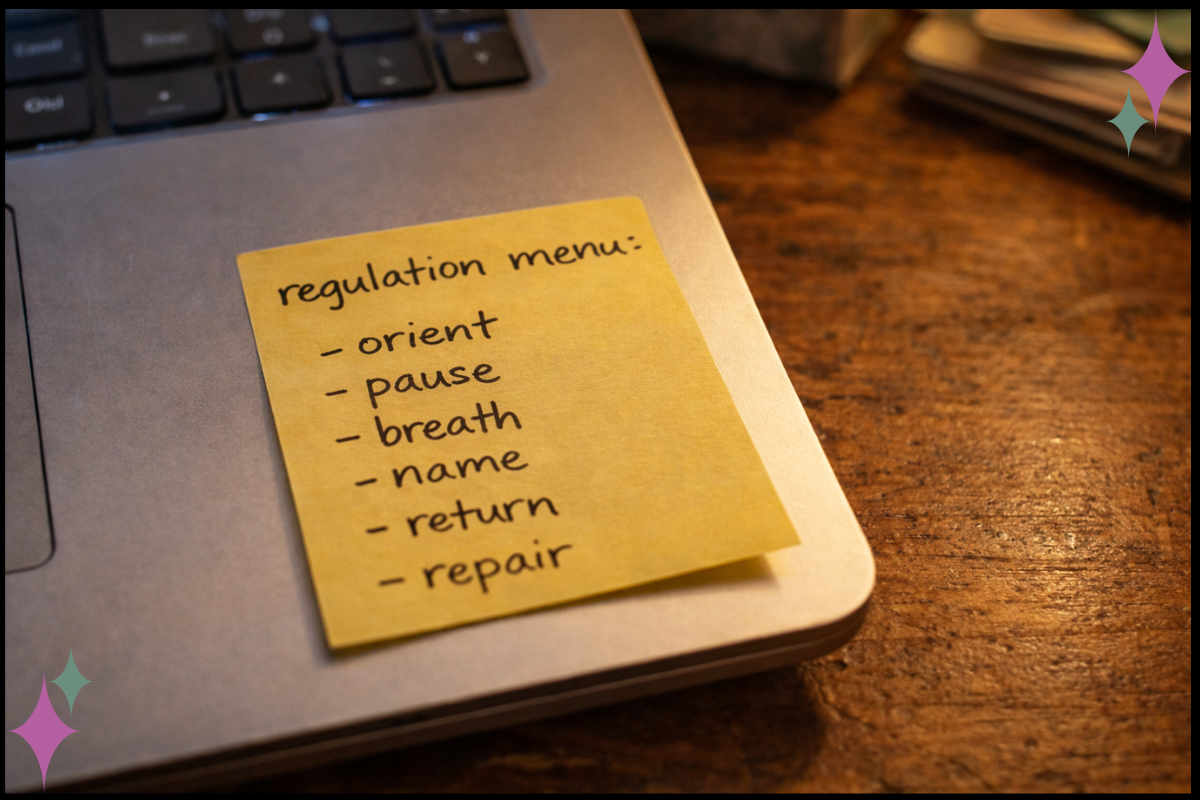
Sometimes it’s obvious: they paused and took a breath, drank water, asked for a break, looked around the room, grounded, named what they felt in their body.
Often it’s subtler and more useful long-term, like how they returned after activation. or recovered after rupture. How they tolerated uncertainty without solving it in thirty seconds and how they noticed the urge to shut down and chose one small step toward staying present.
This question keeps your clinical attention balanced as you track capacity, not only distress. On a nervous system level, naming what you learned lets your body take in, “That’s possible.” Not in a cheesy way but in a lived, experienced and witnessed way.
So answer this one for me - “One regulation skill I saw today was ____.”
Question 6: What part of myself grew today?

Trauma therapy doesn’t just shape clients; it shapes you, the therapist, over time. Which is why this question has become non-negotiable for me. If you don’t name your growth, your brain will default to tracking mistakes, uncertainty, and everything you wish you’d done differently—especially if impostor syndrome is anywhere in the mix.
Growth might look like:
You tolerated silence longer instead of rescuing your client.
You didn’t over-function when a client was dysregulated.
You named something cleanly and kindly.
You repaired a rupture faster than you used to.
You held a boundary and reached out for your own support instead of spiraling after session.
You stayed regulated when you felt pulled.
You noticed your own activation sooner and didn’t shame yourself for it.
Often the growth is internal and invisible, like staying compassionate toward yourself while holding pain, letting “good enough” be enough, trusting your clinical instincts instead of replaying the session for an hour.
Notice what it’s like to check-in with those moments of growth as you work on this anchor -“Today I grew in my ability to ____.”
Question 7: Who needs to hear this story of resilience besides me?
Vicarious resilience deepens when it’s shared. That’s how it moves from “a nice moment” to something your nervous system actually carries.
Sharing doesn’t have to be a big thing. It can be bringing it to consultation: “I want to share a moment of vicarious resilience from today.” It can be a quick text to a colleague: “Quick win: I watched a client come back from rupture.” It can be writing it down for future-you, because future-you will have a day where you need proof that people can heal.
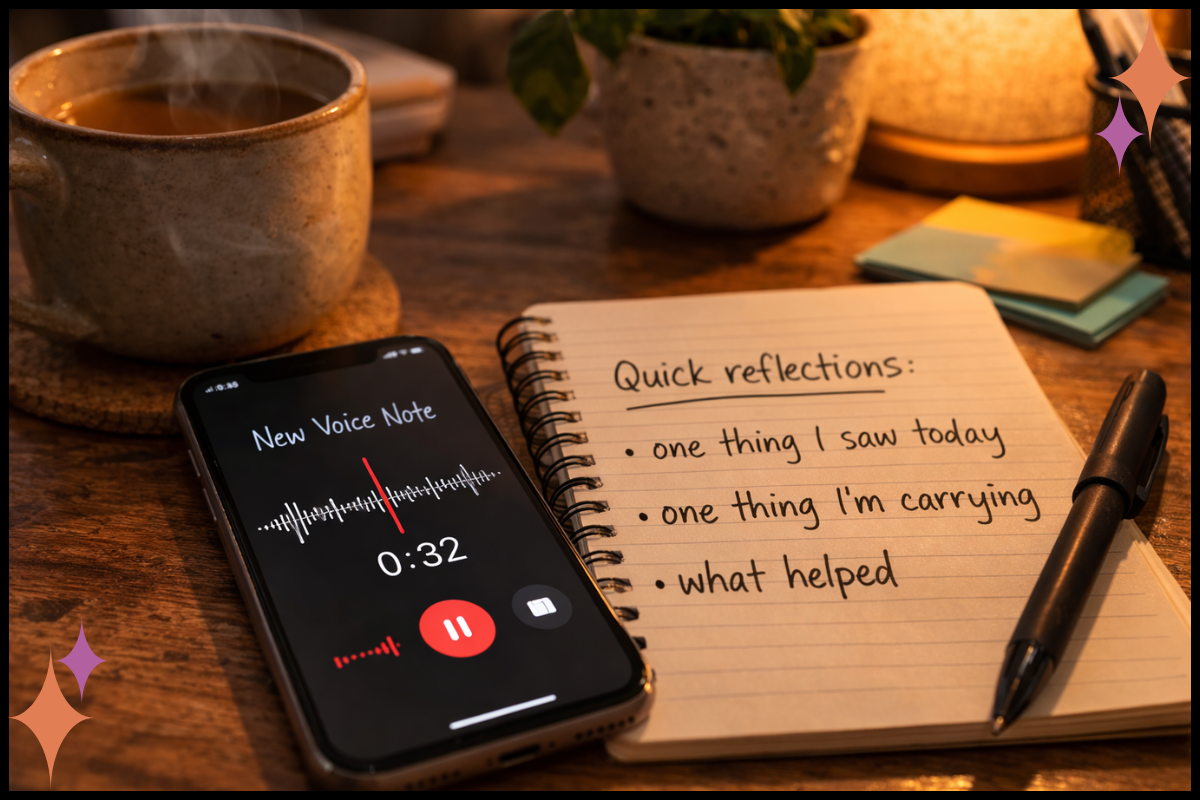
Isolation makes this work heavier than it needs to be. Relational integration helps your body metabolize what you witnessed.
Take a moment and answer this - “I’m going to share this with ____ by ____.”
For example, I’m going to share this with BRAVE by bringing it up in consultation today (something we do all the time together!).
Integration: Notice → Name → Share
Across these questions, the process of vicarious resilience follows a simple rhythm: Notice → Name → Share.
If you take nothing else from this post, please know that vicarious resilience isn’t a bonus. It’s protective material your nervous system needs if you’re going to keep showing up for trauma work long-term.

A lot of trauma therapists have moments of courage and repair passing right through them but not because they don’t care, but because nobody taught them how to identify it, install it, and enhance it.
These seven questions for identifying vicarious resilience create a practice of attention. Over time, that practice can become a renewable energy source in your work. Not because the work gets lighter, but because you’re no longer only carrying the weight.
If one question feels most doable this week, start there. That’s enough.
Free tool: Vicarious Resilience Tracker
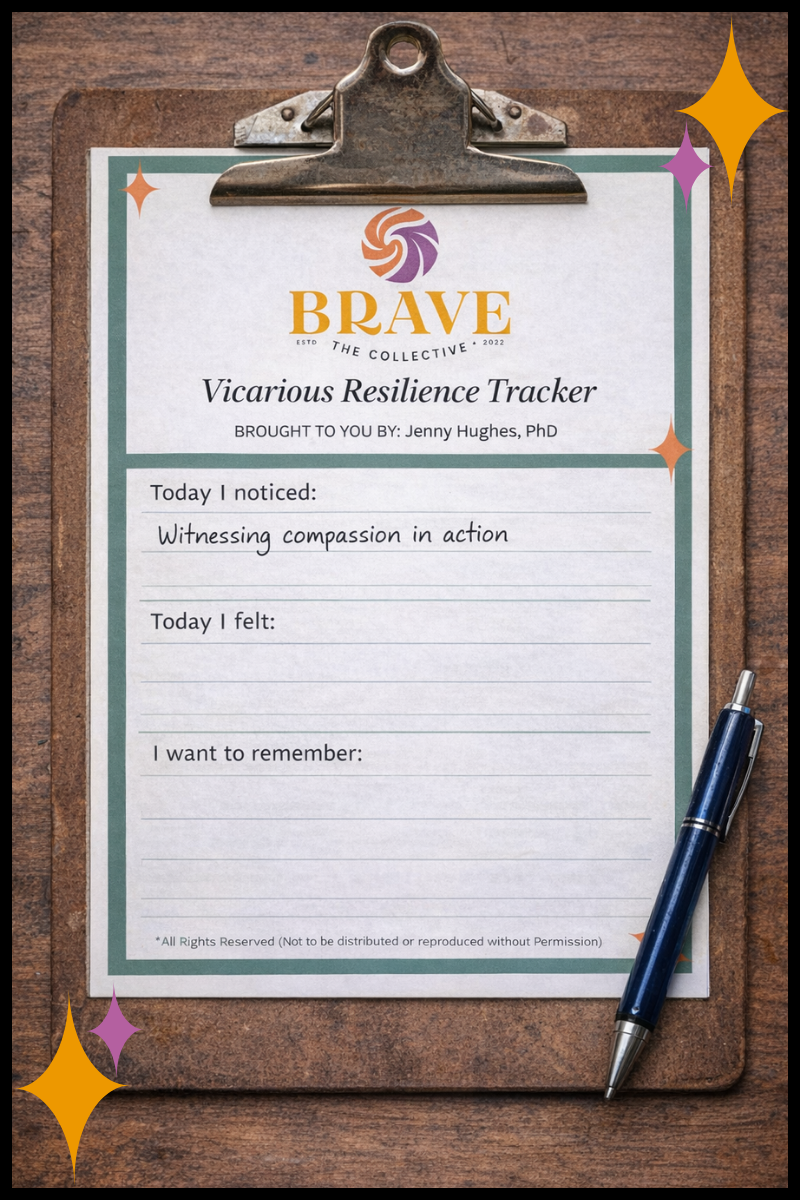
If you want a simple way to put this into practice, grab my free Vicarious Resilience Tracker here: braveproviders.com/vrtracker.
You can print it for your desk, keep it in your notes app, or bring it into consultation. The goal is repeatability—something you return to when your brain wants to file the day under “hard” and move on.