8 Practices That Build Vicarious Resilience Into Team Culture
You've done all the things you're supposed to do.
You see your own therapist, you set boundaries, you downloaded the apps and took the walks and did the breathwork, and yet, you still feel depleted at the end of most days, wondering if maybe you're just not cut out for trauma work, if maybe you absorb too much or need thicker skin.
Here's what I want you to know: You don't have to be a gladiator to be a trauma therapist for the long-term. What you need is a workplace that's actually built to sustain you, because you cannot individually fix what was never designed for you. And that's not a personal failure; that's a systems problem.
In this post, I'm going to walk you through eight practices that set sustainable trauma teams apart. These aren't elaborate wellness programs or expensive retreats, they're supervision practices, team rituals, and structural decisions that clinical leaders can actually implement, and while some of them are small shifts, all of them matter.
If you're reading this as a therapist thinking "I wish my workplace did any of this," I want you to send this article to whoever needs to see it. Your supervisor, your clinical director, your practice owner. Sometimes the most powerful thing you can do is name what's possible.
1. Give Vicarious Resilience a Name
Vicarious resilience is the positive transformation therapists experience through witnessing their clients' healing and courage over time.
Most teams only talk about the hard stuff when things go wrong; we have plenty of language for burnout, vicarious trauma, and compassion fatigue, but vicarious resilience, the moments when the work actually fills you back up, usually goes unspoken.

Part of that is because most people have never even heard the term. If you're new to this concept, I have a full breakdown of what vicarious resilience actually is and why it matters but here's the short version: vicarious resilience is the way that witnessing your clients' healing, their courage, their growth, can actually change you for the better.
It's the reason some therapists stay in this field for decades and still feel connected to why they started.
What sustainable teams do differently is name it out loud. Leaders and supervisors say the actual words: "That sounds like a vicarious resilience moment." They ask "What filled you up this week?" in the same breath they ask about challenges and when you name it,it becomes real.
It becomes something you can track, something you can cultivate, something that's woven into the culture instead of left as an accident.
2. What Sustainable Supervision Actually Look Like
Sustainable supervision protects time for the therapist's internal experience, not just the cases on the caseload.
Let's be honest about what most supervision looks like: you sit down with your supervisor and talk about clients: treatment plans, stuck points, documentation that needs to be finished. Maybe you staff a difficult case or troubleshoot a crisis, and then you move on.
That kind of supervision is necessary, but it's not sufficient, because it's all about the client. The therapist in the room, the one holding all of it, barely gets a mention.
Sustainable supervision asks different questions:
How are you holding this case?
What did that session leave you with?
Where are you noticing this work living in your body this week?
And these questions don't require an hour-long processing session, they can happen in five minutes at the start of supervision, through a genuine check-in that isn't performative, from a supervisor who actually pauses and waits for a real answer.
The teams that last have supervisors who treat the therapist's internal experience as part of the clinical work, not separate from it.
3. Team Rituals That Make Space for the Human
Small, repeatable rituals communicate that the team sees each person as a human being, not just a productivity unit.
This isn't about adding more meetings, because nobody needs more meetings. It's about what happens in the spaces you already have.

Think about the moments that already exist in your workday: the few minutes before case consultation starts, the transition between morning and afternoon, the end of a particularly heavy day.
What happens in those moments right now? Probably nothing intentional. People check phones, answer emails, and jump straight into the next thing.
Sustainable teams build small rituals into those existing moments; maybe a two-minute check-in at the start of consultation that isn't about cases, just "how are you arriving today?" A brief debrief after heavy days where people can name what they're carrying before they walk out the door. A shared transition practice between clients, even if it's just thirty seconds of collective breath.
These aren't elaborate wellness programs, but rather small, repeatable moments that communicate something important: we see you as a person here. Not just a clinician, not just a billable hour, but a human being doing hard work alongside other human beings.
4. Why Leaders Going First Changes Everything
When leadership models vulnerability about the weight of trauma work, it gives everyone else permission to be honest.
If leadership never talks about their own experience with the weight of this work, staff won't either, and it really is that simple.
Therapists are watching to see if it's actually safe to be honest about how the work affects them and when supervisors and directors present as endlessly resilient, never affected, always holding it together, that sends a clear message: struggle isn't welcome here, so keep it to yourself.
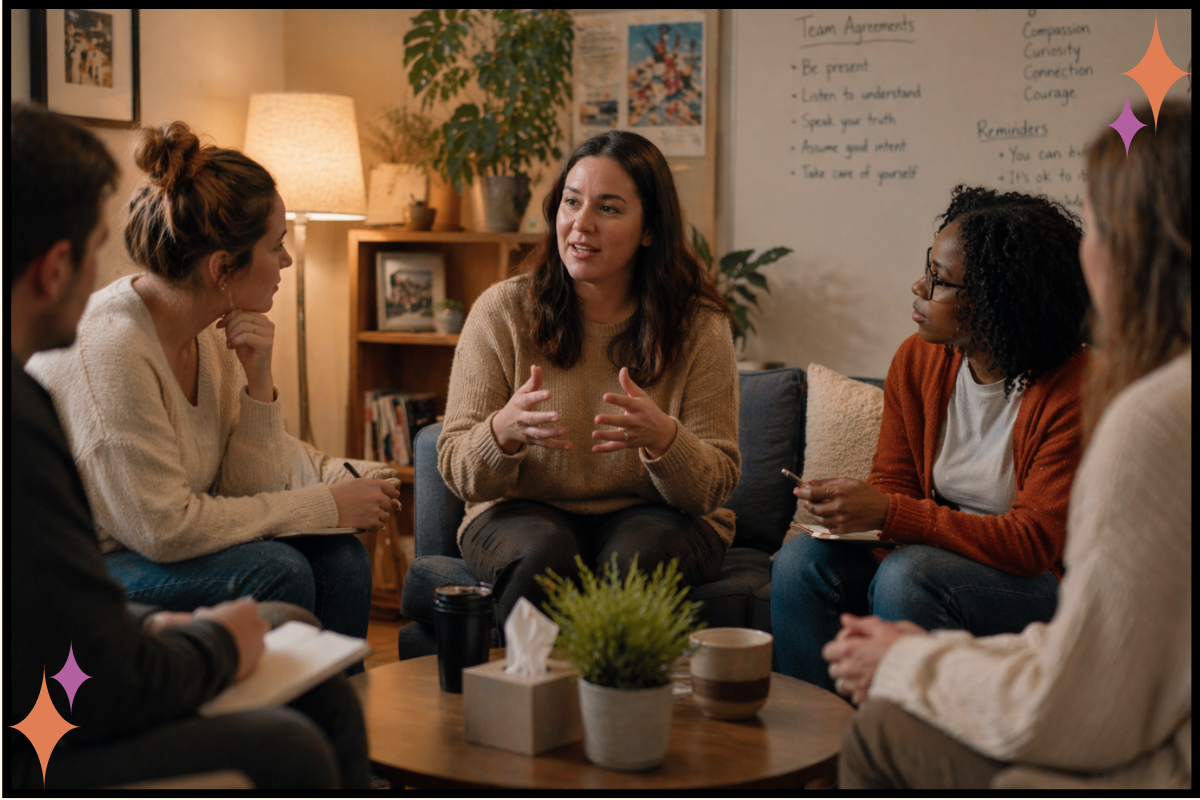
Modeling isn't about oversharing, and you certainly don't need to process your trauma in a staff meeting, but there's a meaningful difference between oversharing and normalizing. A supervisor who says "that case stuck with me too" changes what's possible for the whole team, and a director who admits "this has been a heavy month for me" gives everyone else permission to stop pretending.
Permission travels top-down in organizations, which means that when leaders go first, when they show that being affected by this work is normal and expected rather than shameful, everyone else can exhale.
5. Normalize the Weight Without Pathologizing It
There's a difference between acknowledging that trauma work is heavy and implying that struggling means something is wrong with you.
When leaders model vulnerability, it opens the door and then the culture gets to decide whether to keep that door open or slam it shut.
There's a meaningful difference between a culture that says "this work is heavy and we talk about it" and a culture that says "this work is heavy, and if you're struggling, something must be wrong with you." The first one keeps the door open, while the second one slams it shut and makes sure nobody tries again.

Vicarious trauma isn't a diagnosis; it's an occupational reality. It's what happens when you do your job well, when you actually attune to people who are suffering. The problem comes when organizations treat it like individual weakness, like something you should be able to prevent if you just had better self-care or stronger boundaries.
This distinction lives in how people talk, how policies are written, and how check-ins are framed. "Are you burned out?" feels very different from "How is this work affecting you?" because one implies you've failed while the other implies you're human. One closes the door, and the other holds it wide open.
6. Structural Pauses That Are Actually Protected
Sustainable organizations treat rest as infrastructure built into the workday, not a reward earned after depletion.
This isn't about reminding people to take their PTO, but about real rhythm built into the actual workday.

What does this look like in practice? It might look like gaps between back-to-back sessions, even just fifteen minutes, so therapists aren't jumping from one trauma narrative directly into another with no transition. It can look like a culture of protected lunch breaks that are actually for eating and resting, not catching up on charting. It might look like mental health days that don't require justification or proof that you're sick enough to deserve rest.
All of these are structural decisions, and they require someone with decision-making power to look at how schedules are built, how productivity is measured, and ask a hard question: Are we setting people up to succeed, or are we setting them up to burn out?
The organizations that sustain trauma therapists treat rest as infrastructure rather than reward. It's not something you earn after you're depleted; it's built into how the work is designed from the start.
7. Build Peer Support Into Your Organization
Sustainable organizations don't leave peer connection to chance; they create structures that make support likely.
Some therapists are lucky enough to find a colleague they click with, someone they can process with, someone who gets it. That relationship becomes a lifeline.
But so many others stay isolated for years. They're in an office full of people and still feel completely alone because they don't have anyone they can really talk to about what this work is actually like. And, that isolation makes everything harder, which was one of the primary reasons I startedThe BRAVE Trauma Therapist Collective.
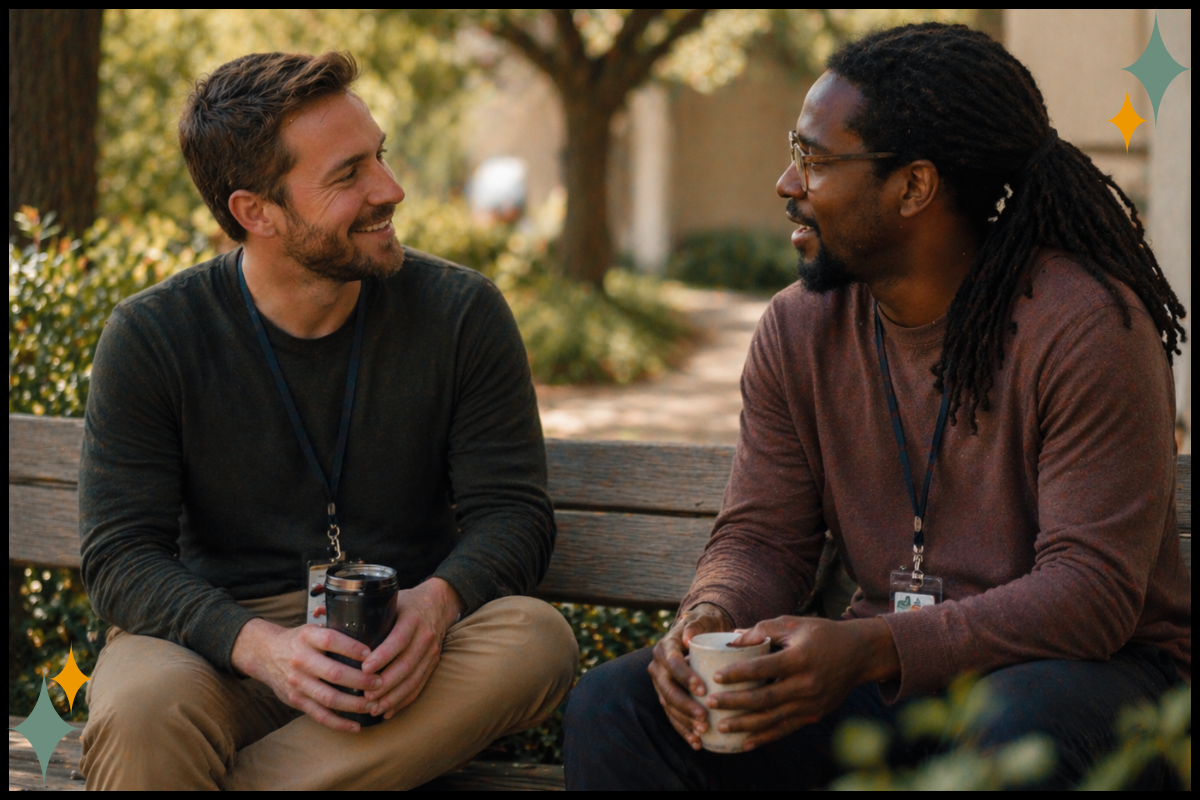
Now that I get to translate our work in BRAVE to organizations, one of the very first things we address is building peer support into the system rather than leaving it to luck.
Sustainable organizations create structures for connection: peer consultation pairs, informal buddy systems, and intentional matching when someone new joins the team. These structures communicate something important: you're not supposed to carry this alone, and we're going to make sure you don't have to.
This doesn't mean forced friendships, and there's so much nuance in getting these systems right. But it does mean creating conditions where connection is likely, where people have time and space to actually know each other, and where isolation isn't the default.
8. Measure What Actually Matters
Productivity metrics won't tell you if your team is sustainable, but tracking compassion satisfaction and psychological safety will.
You can have a team hitting all their numbers and still be six months away from a mass exodus, because productivity metrics don't capture what's actually happening underneath the surface.

But you know what does? Tracking things like compassion satisfaction, psychological safety, whether staff actually feel supported, whether they'd recommend this workplace to a colleague, and whether they're experiencing more vicarious resilience or more vicarious trauma over time.
Organizations that sustain trauma therapists don't just hope the culture is working, they check, and this doesn't have to be complicated. I have two free tools, aVicarious Trauma Tracker and aVicarious Resilience Tracker, that I originally created for individual therapists, but I've also seen teams use them in powerful ways: as a weekly prompt during supervision, as a conversation starter in group consultation, and as a shared language to name what's happening across the team.
They're simple, they're free, and they're a good place to start if you want to bring measurement into your team culture without building something from scratch.
The Gap Nobody Taught Us to Fill

Most clinical leaders I work with genuinely want to build this kind of culture. The supervisors and directors trying to hold their teams together aren't the enemy; they're often just as exhausted, just as under-resourced, and just as unsupported as everyone else. They just never got the training.
We teach therapists how to hold trauma, we train them in modalities and interventions and treatment planning, but we don't teach teams how to hold each other, we don't teach supervisors how to build sustainable cultures, and we don't teach organizations how to actually support the people doing this work.
That's the gap.
What Comes Next
If you're reading this as a therapist thinking "I wish my workplace did even half of this," I want you to send them this article. Screenshot it, forward it, share it with whoever needs to see it.
Sometimes the most powerful thing you can do is name what's possible and give your leadership a vision for what this could look like.
And if you're reading this as a clinical director, supervisor, or practice owner thinking "I want this, but I don't know how to build it," that's exactly what The BRAVE Method training is designed for. It's a framework I bring into organizations to create what we talked about today: shared language around vicarious resilience, supervision practices that actually sustain people, and a culture that doesn't leave resilience up to individual willpower.
If you want to explore whether it's a fit for your organization, book a call and let's talk about what you're dealing with and how this work might help.
You were never supposed to build this alone, either.